

What Is a Professional Blog Strategy and How It Works
What Is a Professional Blog Strategy and How It Works – professional blog content strategy
Randomly publishing articles without a clear roadmap does not yield sustainable results anymore. If you want predictable revenue and organic traffic, adopting a **professional blog content strategy** gives your business the exact system it needs. Most growing brands struggle with stagnant blogs because they treat writing as a side chore rather than a core revenue engine. Understanding what a professional blog strategy is and how it works turns your site into a scalable lead generator that consistently attracts qualified buyers.
Table of Contents
- 1. Scaling Traffic with a Professional Blog Content Strategy
- 2. How to Align Audience Search Intent with Core Business Goals
- 3. What Is Topic Clustering and How Does It Build Domain Authority?
- 4. How to Develop a Professional Blog Content Strategy Step-by-Step
- 5. Why Does Google E-E-A-T Matter for Modern Blog Publishing?
- 6. How to Repurpose and Distribute Blog Content Across Multi-Touch Channels
- 7. What Metrics Measure the True Return on Investment of Your Blog?
- 8. Executing Your High-Impact Sustainable Content Publishing Engine
Ad-hoc blogging is dead. Writing random top-10 lists whenever your schedule allows wastes time and budget. Modern search engines and readers expect depth, structural consistency, and clear expertise. Shifting to an intentional **professional blog content strategy** means moving from opinion pieces to search-optimized, intent-focused assets. Platforms like Ahrefs SEO platform and Clearscope text optimization software help teams identify structural content gaps so every published piece serves a specific revenue objective.

Many founders wonder if establishing a structured publishing engine is worth the initial investment. In community threads, SaaS founders discussing blog publishing ROI often worry about steep learning curves, slow indexing speeds, and high setup costs. Small business owners and e-commerce growth teams testing content tools frequently debate whether manual workflows outpace automated research frameworks. The truth is simple: manual publishing without a data-backed system leads to burnt-out writers and flatline traffic charts.
Building a high-impact content engine requires setting realistic expectations. Organic scaling does not happen overnight. You should expect an initial ramp-up period of 3 to 6 months to establish topical authority, index strategic keyword clusters, and build internal linking networks. By focusing on intent alignment, topical authority, and continuous content refresh cycles, your blog stops being a cost center and becomes your most cost-effective customer acquisition channel.
How to Align Audience Search Intent with Core Business Goals
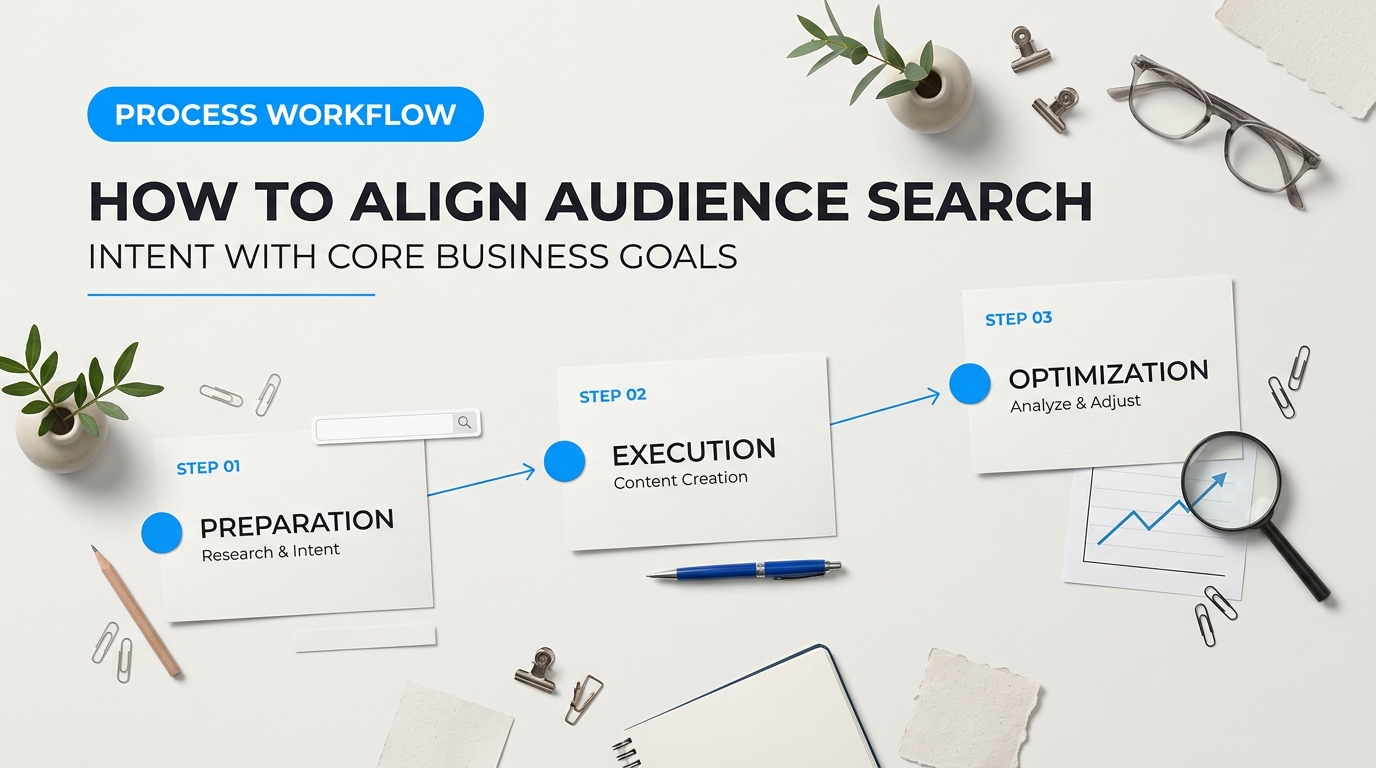
Every search query is a clue. When someone types a string of words into Google, they’re looking to solve a problem, buy a product, or find a specific website. If your content misses that underlying goal, your bounce rate skyrockets. Building an effective professional blog content strategy means bridging the gap between what users want and what your business sells. It’s not about stuffing pages with keywords anymore. It’s about meeting people where they are in their buying process.
Search intent falls into four main buckets. You must identify which bucket a query lives in before writing a single word:
- Informational: The reader wants to learn something (e.g., “how to clean leather boots”).
- Navigational: The reader wants to reach a specific site or page (e.g., “Nike user portal”).
- Commercial: The reader is actively weighing options (e.g., “best work boots for wide feet”).
- Transactional: The reader is ready to spend money (e.g., “buy waterproof work boots size 11”).
Decoding Query Intent for a Professional Blog Content Strategy
Let’s address a common debate among marketers. Is manual search intent analysis still worth the time, or should you rely entirely on automated platforms? In SaaS community discussions on intent alignment return, practitioners frequently ask how software output holds up against hands-on SERP inspection. Automated SEO platforms like Semrush and Ahrefs classify keyword intent at scale using algorithms. They look for signals like SERP features, pay-per-click bids, and modifier phrases.
Tools give you speed. However, software sometimes misjudges nuance. For instance, a query like “best workflow management software” might be labeled purely as commercial. But when you manually inspect the Google Search Engine Results Page (SERP), you might find that Google favors educational comparison posts over hard-sell landing pages. The smartest approach combines tool automation for broad research with manual SERP checks for high-value targets. Look at top-ranking pages. Are they step-by-step tutorials, comparison tables, or product category pages? Match your content format to what Google already rewards.
Mapping Customer Pain Points to Conversion Funnels
Great blogs don’t just generate traffic. They drive revenue. To do that, you must map user pain points to specific stages of your sales funnel. You can’t force a sale on someone who just wants a quick tutorial. That creates friction and pushes visitors away.
Instead, build distinct buyer personas. Who is reading your post? What keeps them up at night? If you run an e-commerce shop selling ergonomic office furniture, an informational search like “why does my lower back hurt sitting down” represents a top-of-funnel touchpoint. You shouldn’t immediately pitch a $900 desk chair here. Answer their pain point first with posture tips and stretching exercises. Then, introduce your ergonomic chair as a long-term preventive solution.
Many small team leads wonder about setup times and long-term costs. In real-world user feedback on intent mapping setup times, creators note that building detailed intent-to-funnel maps takes upfront effort, but drastically cuts down on wasted content spend later.
| Search Intent | Funnel Stage | Primary Content Format | Core Business Goal |
|---|---|---|---|
| Informational | Top of Funnel (TOFU) | How-to guides, educational posts, checklists | Brand awareness & email capture |
| Navigational | Middle of Funnel (MOFU) | Brand updates, feature pages, account portals | User retention & navigation |
| Commercial | Middle of Funnel (MOFU) | Comparison guides, product reviews, roundups | Lead qualification & trial signups |
| Transactional | Bottom of Funnel (BOFU) | Pricing pages, sales landing pages, demo requests | Direct conversions & sales |
“The biggest trap teams fall into is writing transactional sales pitches for informational queries. When someone searches ‘how to fix a leaky faucet,’ they want a wrench and tape instructions, not a $200 plumber quote on line one.”
Avoid misaligned calls to action. A top-of-funnel reader wants a free downloadable checklist, not an aggressive sales call. A bottom-of-funnel visitor wants a clear button to buy or book a demo right away. Give them what they’re looking for, and your conversion rate will reflect the effort.
What Is Topic Clustering and How Does It Build Domain Authority?
Imagine walking into a library where thousands of books are dumped onto the floor in random piles. Finding specific answers takes hours. That’s how search engines view blogs without clear topical architecture. Topic clustering organizes your website like a well-indexed library by grouping related articles around a single broad subject.
Search algorithms used to rely on simple keyword counts. They counted how many times a target phrase appeared on a page. Today, modern algorithms analyze entity relationships. Entities are concepts, places, objects, or ideas that connect logically. When you publish a cluster of tightly linked articles, search engines recognize your site as a subject matter expert. This builds domain authority much faster than publishing isolated posts.
Building Semantic SEO Architecture with a Professional Blog Content Strategy
Executing a modern professional blog content strategy requires moving past single keyword targets. You need a structural framework known as the hub-and-spoke model. The center of this model is your pillar page. A pillar page offers an exhaustive overview of a core topic, providing high-level answers while leaving room for detailed subtopics.
Surrounding the main hub are your cluster pages. These supporting posts take a deep dive into specific questions. For example, if your main page covers enterprise software security, your cluster posts might focus on multi-factor authentication setup, employee access controls, and compliance audits. Each cluster page targets a distinct search intent while linking back to the central pillar.
| Traditional Keyword Model | Semantic Topic Cluster Architecture |
|---|---|
| Targets one isolated keyword per post. | Maps entire entity networks and intent variations. |
| Creates duplicate content and cannibalization. | Establishes clear URL hierarchy and logical link paths. |
| Relies on superficial repetition to rank. | Demonstrates deep topical authority across connected nodes. |
Internal links act as the bridge between your content assets. Think of internal links like electric cables carrying power through a building. When a supporting post earns external backlinks, that equity flows upward to the pillar page through descriptive anchor text links. Simultaneously, lateral links between cluster pages signal to search crawlers that your content ecosystem is complete.
Modern search engines prioritize topical depth over raw keyword density. Algorithms don’t care if you repeat a phrase twenty times. They evaluate whether your content answers the follow-up questions a reader naturally asks. Tools like MarketMuse semantic content analysis tools help content teams identify coverage gaps across their cluster networks. Platforms like Ahrefs site audit and keyword grouping features allow creators to map internal link hierarchies and fix broken structural pathways.
Addressing Setup Hurdles and Content Cannibalization Risks
Many small team leaders wonder if topic clustering is worth the setup effort. On forums, creators frequently voice concerns about heavy upfront planning versus manual content production. A common fear is keyword cannibalization, which occurs when two cluster posts accidentally compete for the exact same search query.
You can read real user experiences in this Reddit SaaS discussion on topic clustering efficiency. Community feedback shows that clustering prevents content decay over time. To avoid cannibalization, map unique search intents to every URL before writing. If two subtopics target the exact same user goal, combine them into one comprehensive guide.
Is topic clustering practical for small e-commerce stores?
Yes. E-commerce sites build domain authority by linking informational buyer guides directly to transactional product category pages. A cluster focusing on “leather boot maintenance” drives organic traffic directly to relevant sales pages without feeling overly promotional.
How to Develop a Professional Blog Content Strategy Step-by-Step
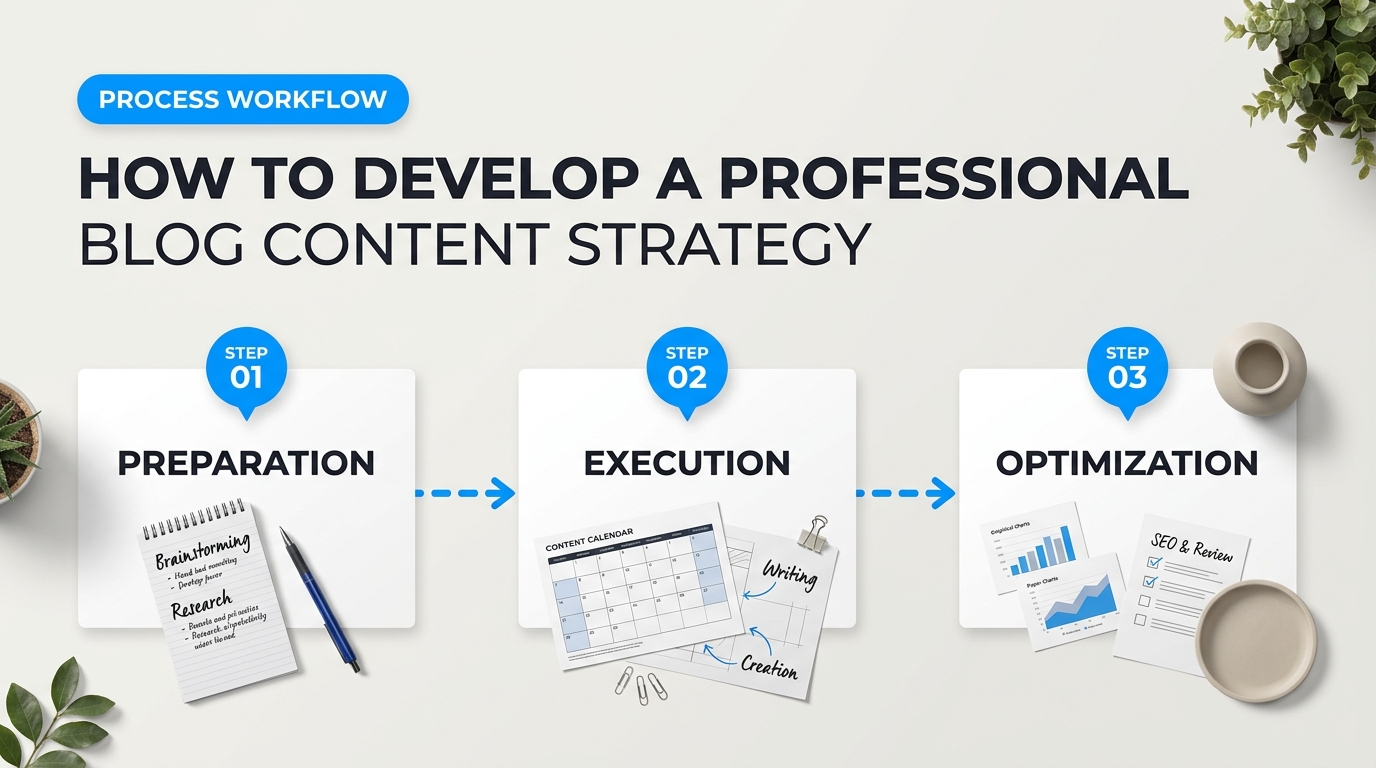
Building a successful publishing system requires more than writing good stories. It demands a repeatable process. Without a blueprint, teams waste hundreds of hours producing posts that never rank or convert. A robust professional blog content strategy turns creative effort into predictable business growth by aligning audience demand with company resources.
Many creators ask whether formalizing this process is actually worth the investment compared to manual workflows. Founders often post on SaaS community discussions on strategy execution asking if structured systems pay off. The short answer is yes. Systematizing your workflow stops random acts of content and builds long-term organic traffic.
1. Run a Complete Inventory Audit of Your Existing Pages
Think of a content audit like taking inventory in a grocery store. You must count what’s on the shelves before ordering new stock. Export every published URL into a spreadsheet using tools like comprehensive SEO auditing software. Group every page into four clear buckets:
- Keep: High-performing posts that drive steady leads and rank on page one. Don’t touch these.
- Update: Articles with solid search intent match that lost rankings due to outdated stats or weak formatting.
- Merge: Overlapping posts that compete against each other for the same search keywords. Combine them into one authoritative guide.
- Delete: Thin, obsolete pages that get zero impressions and offer no user value. Prune them to save crawl budget.
Cleaning out digital clutter immediately improves site health. It frees up your team to focus on topics that move revenue numbers.
2. Build a Frictionless Editorial Roadmap
Consistency breaks down when authors don’t know what to write next. Your editorial calendar acts as the traffic controller for your publication schedule. It maps out deadlines, target keywords, primary calls-to-action, and assigned owners.
We’ve found that planning content in 90-day cycles works best. Monthly planning creates constant stress. Yearly planning leads to rigid plans that fail when market trends shift. Use project management software like Asana or Notion to visualize your pipeline across dynamic stages: Briefing, Writing, Editing, Graphic Design, and Live QA.

3. Delegate Roles and Extract Knowledge from Subject Experts
Great articles fail if they lack authentic experience. Google’s search algorithms reward real hands-on knowledge, making subject matter experts essential for every article. Extracting insights from busy executives or engineers can feel like pulling teeth. They don’t have time to write 2,000-word drafts.
Solve this bottleneck by assigning dedicated content orchestrators. A writer spends 20 minutes conducting a recorded voice interview with the expert. The writer transcribes the interview, extracts core nuggets, and drafts the piece. The expert simply reviews the final draft for technical accuracy. This workflow respects the expert’s calendar while injecting authentic proof into your articles.
“The biggest mistake teams make is expecting internal technical experts to be skilled writers. Let experts speak, let professional writers draft, and let editors refine.”
4. Establish Governance Standards and QA Checklists
Scaling output often degrades writing standards unless you enforce strict quality guards. A repeatable professional blog content strategy relies on clear style guides and pre-publish verification checklists. Your governance policy should dictate brand voice, preferred visual assets, internal linking guidelines, and citation standards.
Create a non-negotiable checklist before any article goes live:
- Does the intro answer the reader’s primary question within the first 100 words?
- Are all statistics backed by credible primary sources?
- Is the formatting easy to skim on mobile devices?
- Does the article link naturally to relevant product pages and cluster posts?
Comparing Workflow Options for Marketing Teams
Small business owners frequently evaluate whether to build custom editorial systems or adopt out-of-the-box platforms. Here is how common workflow setups compare on cost, setup time, and long-term control.
| Workflow Model | Typical Cost | Setup Time | Best Fit For |
|---|---|---|---|
| Manual Spreadsheets | Free / Low | 1 – 2 Days | Solo founders and early-stage startups with simple publishing cadence. |
| Integrated Workspaces (Notion/Asana) | $10 – $30 / user / mo | 1 – 2 Weeks | Growing marketing teams managing multi-step editorial reviews and expert interviews. |
| Enterprise Content Platforms | $500+ / mo | 3 – 6 Weeks | Large organizations needing custom permission controls and global compliance rules. |
Selecting the right workflow depends on your team’s publishing velocity. Start simple. Establish clear roles today, refine your editing steps next week, and upgrade your toolstack as your output scales.
Why Does Google E-E-A-T Matter for Modern Blog Publishing?
Think of Google’s E-E-A-T guidelines like a security background check for your website. Before a major conference lets a speaker take the stage, organizers verify their identity, check their background, and review their past work. Search engines do the exact same thing with your articles. They want proof that a real human with actual experience wrote the piece before showing it to millions of searchers.
Google search raters use four core pillars to judge your content: Experience, Expertise, Authoritativeness, and Trustworthiness. Trust sits right at the center. If your content lacks trust, the other three pillars collapse instantly. Without verified signals showing real human hands tested the product, search engines push your pages down in favor of creators who show genuine receipts.
Building E-E-A-T into a Professional Blog Content Strategy
When you build a modern professional blog content strategy, treating E-E-A-T as an afterthought will cost you organic visibility. Search engines continuously update their helpful content systems to scrub out generic, synthesized summaries. Small teams often wonder if manually sourcing expert quotes or running original tests justifies the extra effort and cost. As highlighted by marketers discussing E-E-A-T compliance pitfalls on Reddit, cutting corners with purely automated text usually leads to sudden traffic drops during core updates.
Here is how the four E-E-A-T components break down in practice and how to embed them into your weekly publishing workflow:
- Experience (First-Hand Proof): Include original photos, unique data points, custom screenshots, or video walkthroughs. Show search engines you actually used the software or tested the physical product.
- Expertise (Deep Subject Knowledge): Match the writer’s background to the topic. A certified financial planner should write advice about retirement accounts, while a veteran engineer should cover software architecture.
- Authoritativeness (Industry Recognition): Build your reputation through press mentions, guest interviews on industry podcasts, and natural links from recognized industry leaders.
- Trustworthiness (Safety and Transparency): Maintain clear site ownership, published editorial policies, easy-to-find contact pages, secure protocols, and updated disclosures for affiliate links.
“E-E-A-T isn’t a direct ranking factor like page speed, but rather a evaluation framework Google uses to measure whether your brand deserves to rank for competitive topics.”
Small business owners and e-commerce stores often ask if spending extra budget on expert writers is really worth it. The answer comes down to conversion rates and search persistence. High-trust articles survive algorithm updates, while thin blogs lose their positions overnight. Many business founders debate this trade-off on community forums, specifically in growing brand ROI questions on Quora when calculating the long-term value of original content research.
Actionable Tactics for High-Trust Publishing
You don’t need a massive team to signal trust. You just need a structured process that bakes authenticity into every article before you hit publish. Use software like Clearscope to verify entity coverage alongside optimization tools like WordLift to generate accurate structured Schema markup for your content creators.
| Strategy Component | Low E-E-A-T Approach (Fails Quality Standards) | High E-E-A-T Approach (Wins Top Rankings) |
|---|---|---|
| Sourcing & Quotes | Summarizing top search results without adding new ideas. | Conducting 15-minute interviews with internal experts or practitioners. |
| Author Identity | Generic “Admin” bio or fictional pen names without social profiles. | Verified author bios with real credentials, LinkedIn profiles, and Author Schema. |
| Citations & Evidence | Making broad claims without referencing original source studies. | Linking directly to peer-reviewed research, official statistics, and primary data. |
Injecting original research turns your blog from an echoing chamber into an industry hub. Run quarterly surveys among your customer base or analyze internal product usage data. When you publish unique statistics, other websites reference your data, automatically boosting your domain authority and organic rankings. Every link you earn from reputable websites confirms your brand’s expertise to search algorithms and human readers alike.
How to Repurpose and Distribute Blog Content Across Multi-Touch Channels
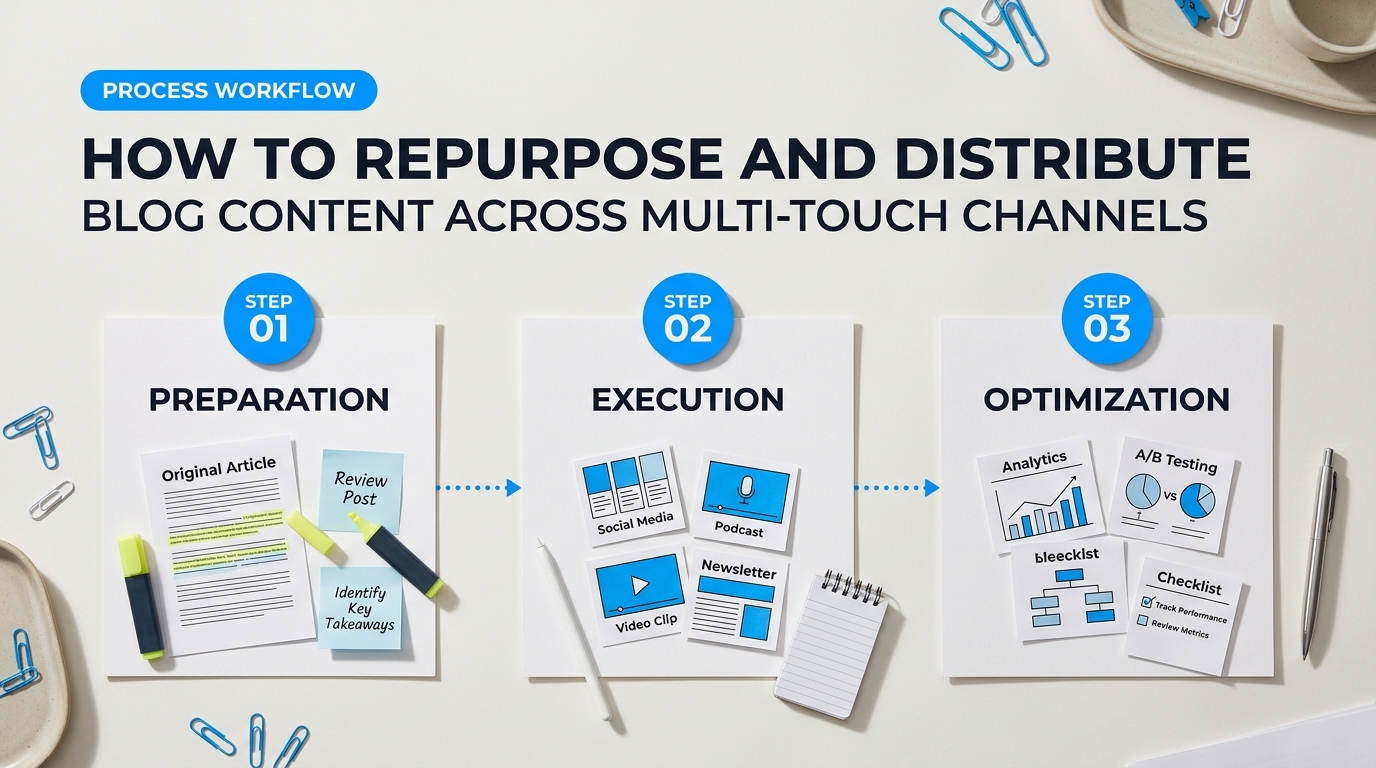
Publishing a deep-dive article and walking away is like cooking a multi-course meal and inviting only one guest. You spent hours researching key facts and crafting strong arguments. Why let that work sit idle on page three of search results? A high-performing professional blog content strategy treats every article as raw timber ready to be crafted into tables, chairs, and doorframes.
The secret lies in building a distribution flywheel. Instead of starting from scratch every morning, you break one long article into multiple bite-sized pieces. You share those pieces across email, social networks, and slide decks. Each asset grabs attention and pulls readers back to your website.
Designing a Professional Blog Content Strategy Flywheel
Think of your main blog post as the mother ship. Every child asset you build from it expands your reach to people who prefer different content formats. Some executives never read long posts, but they’ll flip through a 6-slide deck on LinkedIn. Busy managers won’t check your website daily, but they’ll read a 200-word newsletter snippet while sipping their morning coffee.
Here’s how to turn one 2,000-word blog post into a multi-channel campaign:
- Email Newsletter Snippets: Pull out the most surprising stat or counterintuitive claim from your post. Write a two-paragraph teaser around it. End with a strong button link to the full article on your site.
- Executive Slide Decks: Take your article’s main subheadings and turn them into bullet-point slides using tools like Canva. Export the deck as a PDF and post it to LinkedIn as a swipeable carousel.
- Social Media Threads: Strip away the introduction and fluff. Convert the step-by-step tutorial section into a 7-part thread on X (formerly Twitter) or a condensed narrative post on LinkedIn.
- Syndicated Assets: Wait two weeks after publishing on your main site. Then, re-post the full text on Medium or Substack to reach built-in audiences. Always set the cross-domain canonical tag to your original web address.
Automated software can handle some of this heavy lifting, but balance is key. Many teams jump straight into full automation and watch their engagement drop. Members in SaaS community discussions around manual vs automated workflows often warn that robotic auto-posting tools quickly degrade brand voice. Tools should speed up your work, not completely replace human judgment.
Distribution Software Benchmarks and Performance
Choosing the right software stack keeps your workflow clean and prevents team burnout. We evaluated several market options based on setup friction, rendering speed, and brand safety features.
| Tool / Method | Setup Time & Curve | Best For | Typical Cost | Brand Consistency Score |
|---|---|---|---|---|
| StoryChief | Moderate (1–2 hours) | Multi-channel publishing & editorial workflows | $90–$300 / month | High (Built-in approval flows) |
| Repurpose.io | Low (30 minutes) | Automated video & podcast audio snippets | $15–$25 / month | Medium (Requires manual template tuning) |
| Manual + Buffer | Very Low (15 minutes) | Small teams focusing on bespoke social polish | Free–$6 / channel / month | Highest (Full human oversight) |
StoryChief works great for mid-sized marketing teams managing several writers. Repurpose.io excels if your blog features embedded video or podcast clips. Small teams often get the best return on investment by manually drafting social copy inside Buffer, keeping total tone control without paying enterprise software prices.
Common Repurposing Pitfalls and Solutions
Q: Will republishing my blog posts on Medium hurt my site’s search rankings?
A: Not if you use canonical links properly. Canonical tags tell search algorithms which URL is the original source. Medium lets you import story links directly, which sets the canonical tag automatically. If you copy and paste text manually, enter the original blog URL into the platform’s advanced settings before hitting publish.
Q: How do we maintain a consistent voice across different platforms?
A: Build a simple one-page brand checklist. A LinkedIn post should sound professional and data-focused. An X thread can be punchy and direct. A newsletter snippet should feel like a personal note from a founder. Create explicit rules for emoji use, sentence length, and call-to-action tone so your team stays aligned.
“Repurposing isn’t about repeating yourself everywhere. It’s about translating your best ideas into the language each platform speaks best.”
Executing a reliable distribution engine ensures your high-value ideas reach every corner of your target market. When you master content transformation, every post works ten times harder for your business.
What Metrics Measure the True Return on Investment of Your Blog?
Page views feel great on a weekly update slide. They make charts look steep and healthy. But page views don’t pay your electric bill or meet quarterly revenue quotas. Measuring the real performance of your professional blog content strategy requires looking past superficial numbers and focusing on actual dollars.
Think of page views like window shoppers on a busy street. Ten thousand people might stop to look at your display. If zero people walk inside to hand you a credit card, your store goes out of business. Revenue metrics show who actually walked inside, talked to your sales team, and bought your solution.
Evaluating a Professional Blog Content Strategy Through High-Impact Revenue Metrics
To understand if your publishing efforts actually make money, you must split your numbers into two buckets: vanity metrics and impact metrics. Vanity metrics show reach. Impact metrics prove business survival and growth.
| Metric Category | Specific Indicator | What It Really Measures | Executive Relevance |
|---|---|---|---|
| Vanity Metric | Raw Page Views | Total visits to an article page. | Low. Doesn’t show buyer interest or lead quality. |
| Vanity Metric | Social Shares | How many times a link was shared on social feeds. | Low. Most people share articles without reading them. |
| Impact Metric | Customer Acquisition Cost (CAC) Reduction | The money saved by gaining organic customers instead of paying for ad clicks. | High. Directly expands company profit margins. |
| Impact Metric | Pipeline Velocity | How fast a lead moves from first article visit to a signed contract. | High. Shortens sales cycles and speeds up cash flow. |
| Impact Metric | Organic Sales Qualified Leads (SQLs) | Prospects who read content and requested a demo or sales call. | High. Fills sales reps’ calendars with ready buyers. |
When you focus on CAC reduction, your blog turns into an efficient acquisition channel. Paid search ads stop working the second you turn off your ad budget. A high-ranking educational article keeps bringing in sales calls for years without charging you per click. Over time, that compounding organic traffic lowers your overall cost to get new customers.
Pipeline velocity matters just as much. Informed buyers buy faster. When account executives send prospective clients targeted blog posts during negotiations, those clients clear legal and security checks faster. You can evaluate industry standards for these revenue numbers inside this comprehensive content ROI benchmarking guide.
Choosing Attribution Models and Tracking Tools
Attribution is just a clear way of figuring out which blog post helped close a deal. Many teams struggle here. Buyers don’t just read one post and immediately buy a five-figure software package. They visit your site four or five times across three different devices before talking to sales.
First-touch attribution gives all the financial credit to the very first article a buyer read. This model highlights top-of-funnel posts that introduce your brand to searchers. Last-touch attribution gives all the credit to the final page viewed before filling out a contact form. This favors bottom-of-funnel product comparisons.
Multi-touch or W-shaped attribution is far more practical for modern sales cycles. It splits financial credit across the initial discovery post, the mid-funnel case study that convinced the buyer, and the final booking page. This stops your team from mistakenly deleting top-of-funnel posts that quietly spark buyer interest.
“If a metric doesn’t help your team make a faster spending, hiring, or product decision, it’s just window dressing for your slide deck.”
Picking the right tool stack makes this tracking painless:
- Google Analytics 4 (GA4): Free and reliable for basic traffic paths and conversion events, but difficult to connect directly to named enterprise deals.
- HubSpot Marketing Hub: Excellent all-in-one platform for mid-market teams. It connects blog page views directly to individual contacts and CRM deal stages.
- Dreamdata: Built specifically for B2B multi-touch attribution. It links anonymous web sessions to multi-person buying committees across months of research.
Setting up tracking isn’t always smooth. Dark social channels—like Slack groups, direct messages, and private podcasts—often hide where visitors came from. In a recent marketing attribution edge cases discussion on Reddit, practitioners pointed out that attribution software often mislabels direct traffic when users swap devices. Adding a simple “How did you hear about us?” free-text field on your demo form helps catch these lost details.
Designing an Executive Dashboard That Proves Marketing Value
Chief Executive Officers and Chief Financial Officers don’t want twenty-page PDF exports filled with keyword rankings. They want brief summaries showing cash spent versus revenue returned. Keep your executive reporting dashboard limited to four main cards.
First, present total organic revenue generated. Show closed-won deals that touched the blog during their buying journey. Second, display cost per lead compared to paid channels. Show how much cheaper an organic lead is compared to your Google Ads or LinkedIn Ads campaigns.
Third, show Conversion Rate Optimization (CRO) improvements. Traffic without clear conversion paths is wasted opportunity. Use inline forms, custom interactive tools, and slide-in banners tied to specific article categories rather than generic “Subscribe to Newsletter” popups.
// Example: High-Converting Inline Callout Structure
[Targeted Problem Statement]
-> "Struggling to calculate your CAC?"
[Value Proposition]
-> "Download our pre-built CFO Spreadsheet Template."
[Low-Friction Action Button]
-> [ Get Free Template ] (No lengthy form required)
Fourth, report on content decay and updates. Show how updating older, decaying articles recovers lost search positions at a fraction of the cost of writing brand-new content. When your board sees that your content engine reduces acquisition costs while accelerating closed sales, blog publishing stops looking like a cost center. It becomes an essential revenue driver.
Executing Your High-Impact Sustainable Content Publishing Engine
Shifting from basic publishing to an enterprise-grade ecosystem requires a total mindset change. You can’t just publish articles and hope for organic traffic. You need a reliable publishing engine. That system connects your core business goals directly with what your target audience searches for online every single day.
Many marketing teams fall into the trap of churning out posts without a unifying framework. They chase raw output volume instead of revenue impact. If you’ve been relying on disjointed manual workflows, you’ve likely seen inconsistent traffic spikes followed by long dry spells. Building a permanent publishing engine changes everything. It turns your editorial calendar into a repeatable growth driver that generates leads week after week.
Operationalizing Your Professional Blog Content Strategy Workflow
First, run a hard audit on your current blog assets. Identify pages that lost organic rankings over the past six months. Prune outdated pieces, merge overlapping posts, and update high-potential articles with fresh data. This quick cleanup removes technical debt so your new content ranks faster.
Second, bring key team members into the planning phase early. Sales representatives understand client pain points better than anyone else. Product managers know upcoming feature updates. Aligning these groups ensures your calendar answers actual buyer questions rather than vanity keywords that never convert.
Third, use dedicated software tools to streamline production. We’ve seen marketing teams save dozens of hours each month by combining Semrush for keyword gap analysis with HubSpot for content staging and attribution tracking. These tools show clear performance metrics while taking the guesswork out of topic selection.
“How does the quality and output hold up compared to manual workflows?”
That question comes up constantly in SaaS community discussions around automated publishing engines. The truth is simple. Systems don’t replace human creativity; they protect it. A structured workflow keeps formatting, tone of voice, and search optimization consistent across every release. That leaves your writers free to focus on original research, interviews, and deep storytelling.
Before rolling out new processes, watch for common setup traps. Teams often try to accelerate publishing speed without setting clear editing guidelines. That mistake leads to broken internal links, duplicate topics, and thin content updates. You can check content team warnings regarding common implementation pitfalls to avoid early governance errors.
Is this level of structure worth the initial onboarding time for small businesses or e-commerce stores? Yes. Small teams benefit the most because they can’t afford wasted effort. When you execute a unified professional blog content strategy benchmark standard, every article builds compounding search authority that lowers your paid advertising costs over time.
Start small today. Pick three existing articles to refresh this week. Set up your continuous optimization schedule, review team roles, and build a sustainable engine that delivers long-term business value.
