How to Implement EEAT Guidelines for Lifestyle Blogs
How to Implement EEAT Guidelines for Lifestyle Blogs
If you run a personal or passion site, learning how to implement eeat guidelines for lifestyle blogs can mean the difference between steady search traffic and invisible pages. Google changed the rules for digital publishers. Algorithms constantly scan personal blogs to separate hands-on experience from generic, regurgitated advice. When search engines flag your content as low-trust, organic traffic vanishes overnight. We’ve seen hundreds of passionate creators watch their reach collapse after recent Google core quality updates.
Table of Contents
- Why Search Engines Penalize Low-Trust Lifestyle Content
- What Causes Lifestyle Blogs to Fail Google E-E-A-T Audits?
- How to Audit Your Site Using EEAT Guidelines for Lifestyle Blogs
- What Are the Quickest Fixes to Instantly Boost Blog Trust Signals?
- How to Build Long-Term Authoritative EEAT on a Personal Blog
- How Can Lifestyle Bloggers Prevent EEAT Drops During Future Core Updates?
- Securing Your Blog's Visibility with Sustainable Search Trust
What causes these brutal rank penalties? Google evaluates sites based on Experience, Expertise, Authoritativeness, and Trustworthiness (E-E-A-T). Lifestyle niches—like travel, wellness, home decor, and parenting—touch directly on everyday well-being. When a post gives untested advice or hides author credentials, search bots treat it as a potential risk to readers. You might lose rankings even if your writing sounds great.
Creators frequently express frustration over these algorithmic shifts. In a Reddit SaaS community thread on low-trust content penalties, bloggers questioned whether putting resources into manual trust signals holds up against standard AI output workflows. The reality is simple: automated or thin content lacking real human proof fails modern trust checks every single time.
Symptoms of low trust aren’t subtle. Your impression counts fall. Keywords slip from page one to page five. Tools like Ahrefs organic traffic monitoring software display sharp downward cliffs right after broad core updates launch. Recovering requires a systematic overhaul of your site’s reputation signals. Understanding practical eeat guidelines for lifestyle blogs helps you fix missing author bios, unverified claims, and affiliate disclosure errors before the next update hits.
What Causes Lifestyle Blogs to Fail Google E-E-A-T Audits?
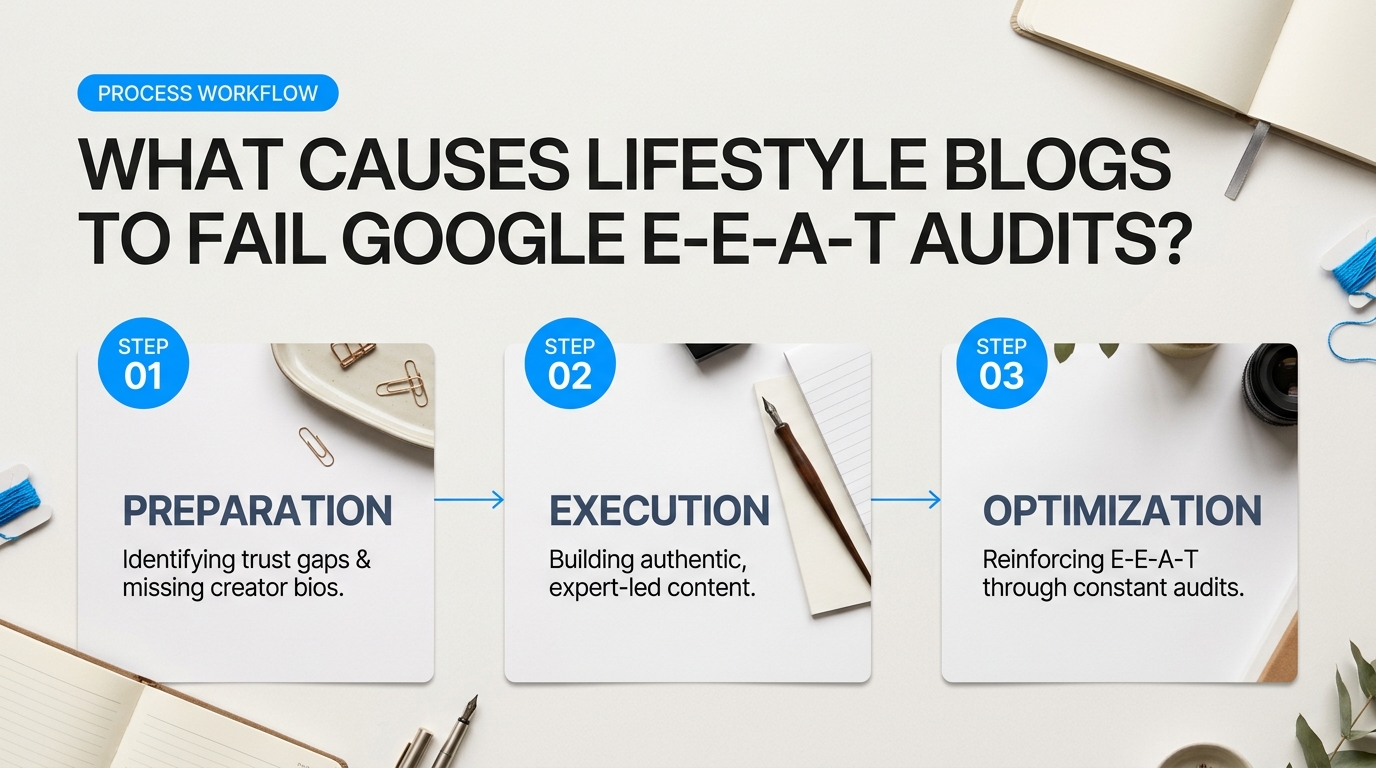
Lifestyle blogs fail quality audits for simple reasons. Search algorithms look for genuine real-world experience, clear accountability, and verified facts. When your blog reads like an anonymous content factory, search raters flag it fast. Many creators wonder why their traffic drops overnight after a core update, even when following basic search trust criteria for lifestyle publishing. It’s easy to make subtle mistakes. You might think a pretty layout hides a missing bio, but crawlers look much deeper.
Google relies on both automated systems and human Quality Raters to grade websites. When your pages lack personal experience or make bold claims without proof, your search presence suffers. Understanding these root causes helps you spot issues before your rankings fall off a cliff.

Four Red Flags in EEAT Guidelines for Lifestyle Blogs
Most failed audits stem from four specific breakdowns in credibility. Eliminating these flaws is the fastest way to stabilize your organic performance.
- Faceless and Anonymous Author Personas: Writing under “Admin” or a generic pen name without social verification destroys trust instantly. Google wants to know who wrote the piece, why they’re qualified to speak on the topic, and where their professional footprint lives online. If your author bio reads like empty template text, search evaluators won’t trust your advice.
- Unverified Health and Wellness Advice: Lifestyle topics often overlap with health, nutrition, and mental well-being. These areas trigger Google’s strict Your Money or Your Life (YMYL) standards. Publishing claims like “drink this tea to cure anxiety” without citing clinical trials or having a certified professional review your draft triggers immediate penalties.
- Thin Product Roundups Lacking Hands-On Experience: Summarizing manufacturer websites or rewriting Amazon listings doesn’t work anymore. Google rewards creators who actually buy, unbox, and test products. As marketers pointed out in recent SEO compliance discussions on audit edge cases, relying exclusively on stock photos and generic descriptions is a top reason affiliate blogs get hit during product reviews updates.
- Absent Publisher Transparency: Hiding who owns the site creates suspicion. If visitors can’t easily find a real business address, clear contact details, or your editorial standards, raters assume you’re running a temporary affiliate farm.
“If a reader can’t verify who tested the product or who wrote the health guide, search algorithms won’t take the risk of ranking that content.”
To fix these issues, you need to understand how low-trust content compares directly against high-trust content in the eyes of search evaluators.
| Audit Fail Trigger | High-Trust E-E-A-T Solution |
|---|---|
| “Admin” or missing bylines on articles | Detailed author bios linking to real LinkedIn profiles and external press mentions |
| Unbacked health claims or fad diet advice | Citing peer-reviewed scientific journals and adding medical reviewer badges |
| Stock photos in product review roundups | Original high-resolution photos and video proof of hands-on product testing |
| Hidden affiliate disclaimers and contact forms | Prominent, clear affiliate disclosures and explicit ownership details on an About page |
Fixing these issues requires auditing your technical data alongside your content. Tools like Schema App help you insert structured schema markup that clearly connects your articles to real people and registered organizations. At the same time, platforms like Ahrefs let you monitor your external link footprint to make sure low-quality backlink spam isn’t destroying your site’s brand reputation. Aligning your site with official site trust evaluation methods protects your traffic against future algorithm changes.
How to Audit Your Site Using EEAT Guidelines for Lifestyle Blogs
Executing a 4-Step Site Audit for Experience and Trust
Auditing your blog is like taking a car to a mechanic. You must look under the hood to see why search engines might slow down your reach. A structured audit uncovers silent trust leaks before your organic traffic takes a hit.
Audit your bio pages first. Search raters want to know who wrote the advice and why anyone should listen. Check every author profile across your site. Does the page display real credentials, direct social media handles, and clear evidence of hands-on testing? If your bio simply states that you love travel without showing photos, trip logs, or published work, search bots will flag your content. Add structured data like Author Schema with SameAs properties to connect your profile to external press releases or social channels.
Benchmarking Content with EEAT Guidelines for Lifestyle Blogs
Applying clear eeat guidelines for lifestyle blogs turns vague quality rules into concrete site edits. Google uses real human evaluators who follow a massive internal handbook to score search results. You can grade your own content using those exact standards.
Focus heavy attention on lifestyle topics that cross into health, wellness, or financial advice. Google treats these as Your Money or Your Life (YMYL) topics. If you share smoothie recipes for weight loss or budget planning tips, your claims require high evidence. Benchmark your top-performing articles against the strict scoring criteria in Google’s quality manual. Look for vague statements, missing author background, or missing references. Replace fluff with concrete facts and first-hand photos.
“Unclear affiliate links and hidden sponsorships destroy user confidence instantly.”
Verifying Source Citations and Disclosure Placements
Verify every external link across your lifestyle guides. Linking to weak sources or low-authority blogs weakens your site profile. Always link to primary research, medical journals, or official brand announcements when making claims.
Review your affiliate disclaimers across all devices. Your financial disclosures must appear above the fold, right before readers see any affiliate links. A common trap is placing disclaimers in tiny footer text or hiding them inside mobile menu drawers. Search algorithms hate hidden ads.
Community feedback highlights the debate between manual auditing and automated software. Creators in a Reddit SaaS discussion on audit manual workflows noted that automated crawlers frequently miss hidden disclosure popups or subtle mobile rendering bugs. Combining automated scanners with manual visual checks gives you the cleanest results.
Comparing Top Audit Tools for Lifestyle Publishers
Using the right tools makes running a site audit faster and far less overwhelming. Here is how leading auditing solutions match up for small-to-midsize lifestyle blogs.
| Tool / Solution | Best For | Key Features | Estimated Cost |
|---|---|---|---|
| Screaming Frog SEO Spider | Technical & Schema Audits | Finds missing author schema, broken links, and missing disclosures at scale. | Free (up to 500 URLs) or ~$259/year |
| Surfer SEO Content Audit | Content Quality & NLP Alignment | Compares page depth, source citations, and topic coverage against top competitors. | ~$89 – $219/month |
| Manual Checklist Audit | Authenticity & Experience Review | Catches thin personal anecdotes, fake bios, and bad affiliate placement. | Free (Requires 3-5 hours of labor) |
Choosing between paid audit software and manual checks comes down to your site scale. For blogs under fifty pages, manual checks using a spreadsheet are completely free and accurate. For larger publishers, automated tools save dozens of hours by instantly catching missing schema and broken outbound references. Following eeat guidelines for lifestyle blogs during every audit guarantees your content stays trustworthy, authoritative, and ready for future search updates.
What Are the Quickest Fixes to Instantly Boost Blog Trust Signals?
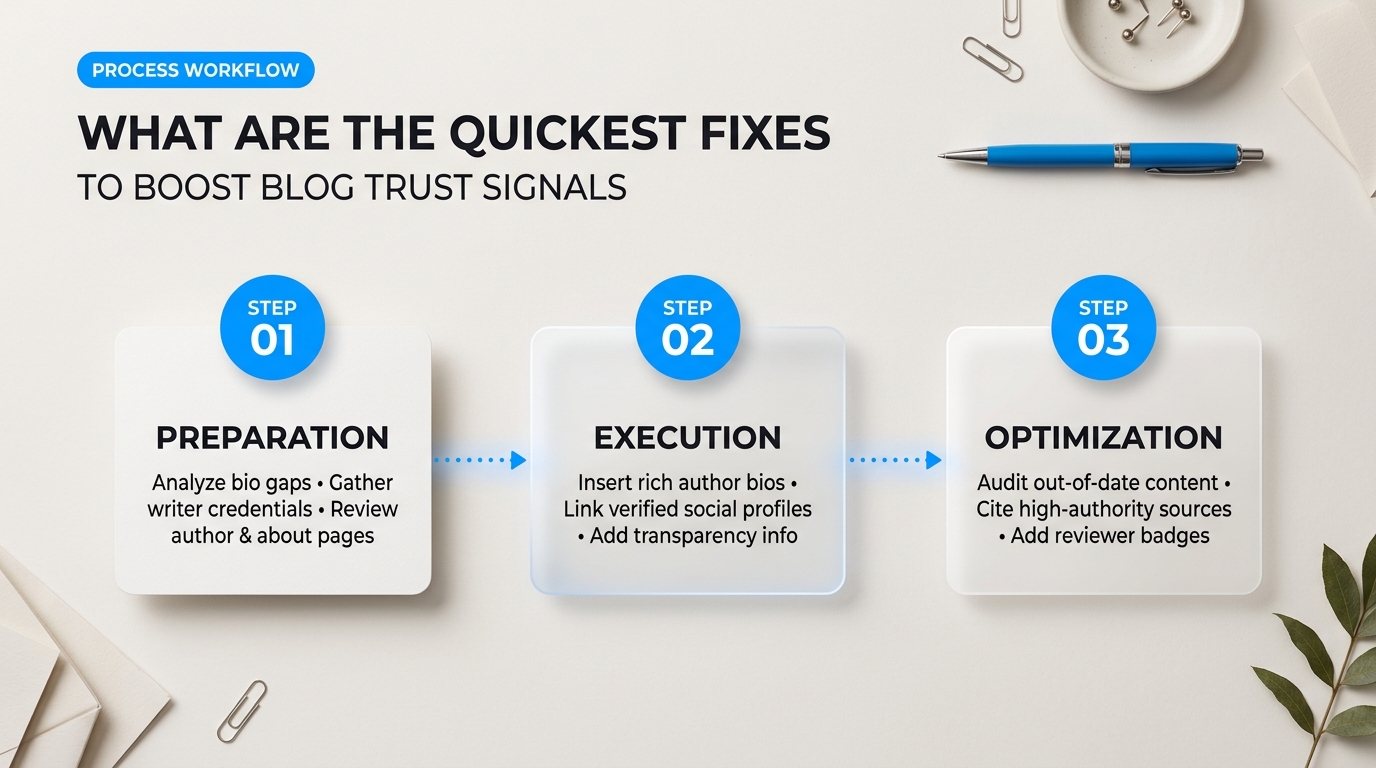
Fixing your site’s search credibility doesn’t require rebuilding your content from scratch. Many creators panic after a core algorithm update, assuming they must rewrite every recipe, travel guide, or beauty review. In reality, search crawlers look for explicit identity signals that you can install in a single afternoon.
Fast-Tracking EEAT Guidelines for Lifestyle Blogs with Technical Signals
Think of schema markup as a digital driver’s license for your content. Without structured code, search algorithms must guess who wrote your article and whether they have real experience. Structured code explicitly tells search bots who created the content, where else that author publishes, and what credentials they hold.
We’ve seen bloggers struggle with complex manual code. You don’t need to be a developer to fix this. Plugins like the Rank Math SEO plugin for WordPress auto-generate Person and WebPage schema across your entire site. Fill out your author profile completely. Include direct links to your active social profiles, published articles, or podcast appearances inside the sameAs schema array. Search engines use these outbound links to map your real-world identity.
4 High-Impact Fixes You Can Implement Today
If you need an immediate trust lift, prioritize these four low-friction updates across your publishing workflow:
- Deploy Complete Person Schema: Connect every post to a verified author bio with complete structured data attributes.
- Build a Dedicated Editorial Policy Page: Detail your hands-on product testing standards, recipe development process, and original photography rules.
- Move Affiliate Disclosures Above the Fold: Place clear monetary disclosures directly under your post title, before any affiliate link appears in the text.
- Insert Peer-Reviewed Citations: Add external links to authoritative medical, scientific, or government databases whenever you make wellness, financial, or safety claims.
“Slapping automated schema badges on a site without fixing missing author details won’t trick search raters. Real transparency has to match your visible site content.”
This point from a recent marketing thread discussing trust signal implementation pitfalls highlights a common trap. Automated fixes save time, but honest human details must back up your code. Search algorithms evaluate whether your layout feels like a legitimate publication or a faceless content farm.
Evaluating Rapid Fix Strategies
When selecting tools to streamline your trust signals, balance setup speed against long-term site performance. Here is how popular implementation workflows compare for lifestyle publishers:
| Optimization Strategy | Setup Time | Primary Benefit | Best Tool / Workflow |
|---|---|---|---|
| Author & Organization Schema | 30 – 60 Minutes | Machine-readable identity verification for search bots | InLinks entity schema analyzer or Rank Math Pro |
| Editorial & Testing Policy | 1 – 2 Hours | Proves hands-on testing rigor to human quality raters | Manual policy creation using transparent testing guidelines |
| Above-the-Fold Disclosures | 15 Minutes | Ensures FTC compliance and upfront user honesty | Theme hook or custom block editor header block |
| Fact-Checker Citations | 10 Mins per post | Validates health, finance, or safety assertions | Hyperlinks to primary research databases and medical journals |
How much do these quick fixes cost? Adding basic schema code, clear author bios, and policy pages costs nothing beyond a few hours of your time. Paid plugins run between $60 and $200 per year, protecting your organic search traffic from unexpected update drops.
Reviewing community feedback on trust signal return on investment confirms that early structural improvements yield faster indexation stability. Aligning your website design with established eeat guidelines for lifestyle blogs converts a vulnerable website into an authoritative publication search engines reward.
How to Build Long-Term Authoritative EEAT on a Personal Blog
Building lasting search engine trust takes time. You can’t fake first-hand experience with quick technical hacks. Search engines continuously refine how they evaluate real human involvement on personal sites. To stay ahead, your site must showcase authentic proof that you actually tested the products, cooked the recipes, or visited the destinations you cover.
Visual Evidence: Staging Custom Media and Video
Stock photos destroy credibility. When three hundred lifestyle sites use the exact same image of a kale smoothie, search algorithms notice immediately. You need original media. Take photos directly on your phone, upload them without heavy stock filters, and leave the camera metadata intact. Raw, unedited images often perform far better than overly polished graphics because they scream authenticity.
Short video clips provide another massive trust signal. Embed a quick 15-second process video showing your hands prepping a dish or unboxing a travel kit. Search crawlers track video embeds and user interaction signals. This visual footprint serves as undeniable proof of physical presence.
Applying EEAT Guidelines for Lifestyle Blogs to YMYL Niches
Lifestyle content frequently touches on health, fitness, beauty, and personal finance. Search engines treat these areas as Your Money or Your Life (YMYL) topics. If you offer advice on keto diets or skincare routines without a professional background, your organic traffic will eventually plummet.
Following modern eeat guidelines for lifestyle blogs in these competitive categories means bringing in credentialed reviewers. Reach out to registered dietitians, certified personal trainers, or board-certified dermatologists. Ask them to review your draft, provide a short quote, or sign off as an expert contributor. You can use platforms like Connectively (formerly HARO) or BuzzStream to connect with credentialed experts willing to review articles in exchange for a bio feature.
| Strategy Component | Sustainable E-E-A-T Approach | Low-Effort Shortcut | Long-Term Impact |
|---|---|---|---|
| Visual Proof | Original photos with intact metadata & short video embeds | Unedited royalty-free stock imagery | High user retention & strong algorithm trust |
| YMYL Expertise | Quotes and reviews from accredited professionals | Self-attributed medical or financial claims | Protection against core algorithm penalizations |
| External Validation | Earned digital PR mentions & niche podcast features | Purchased link packages on low-quality domains | Sustainable domain authority growth |
Digital PR Strategies to Earn Niche Mentions
Many creators ask whether manual trust-building is worth the subscription fees of outreach tools or the extra labor hours. Recent community discussions regarding manual authority workflows highlight how relying purely on automated publishing leaves sites vulnerable during broad updates. Shortcuts save time today, but they cost you traffic tomorrow.
Real digital PR isn’t about buying cheap guest posts. It centers on becoming a reliable source for journalists and fellow creators. Send quick, punchy commentary to podcast hosts, digital magazines, and niche news outlets. Reviewing established E-E-A-T benchmark evaluation criteria can help you structure your outreach so publications view your domain as a legitimate, quote-worthy brand.
“Authentic experience can’t be scraped or generated by an algorithm. The single best investment for a lifestyle creator is documenting real life as it happens.”
How Can Lifestyle Bloggers Prevent EEAT Drops During Future Core Updates?
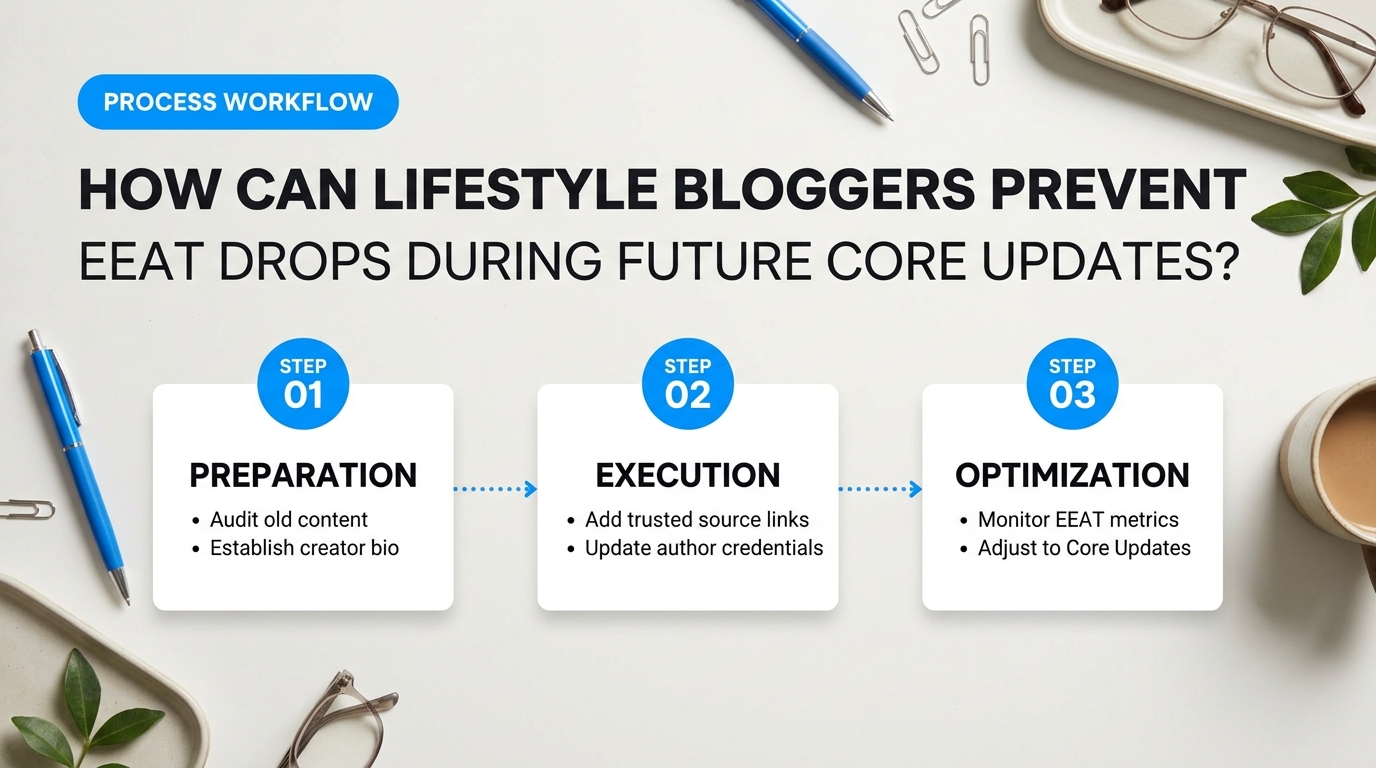
Establishing a Routine Audit Cadence with EEAT Guidelines for Lifestyle Blogs
Google updates its search algorithms constantly. A single core update can wipe out half your traffic overnight if you neglect old posts. Preventing these drops isn’t about guessing algorithm tweaks. It’s about maintaining a clean, trustworthy site every single month.
Think of your blog like a restaurant kitchen. If you stop inspecting ingredients, bad food reaches your customers. A quarterly audit keeps your content fresh and safe. Focus on your top fifty traffic-generating pages first. Check every external link. Replace broken links and remove references to discontinued products.
Automated tools speed up this audit process significantly. We recommend running a site crawl using Screaming Frog SEO Spider alongside Ahrefs. Screaming Frog spots broken links and missing metadata quickly. Ahrefs highlights pages losing organic traffic over time. Many creators debate manual reviews versus automated crawling in online forums. As highlighted by Reddit marketers discussing update pitfalls and compliance traps, relying purely on manual audits often leads to missed compliance issues on older posts. Combining automated scanning with manual expert reviews gives you the best protection.
Vetting Guest Contributors to Maintain Editorial Authority
Accepting guest posts seems like an easy way to scale content. It can also ruin your search reputation quickly. Google tracks contributor quality across your domain. Publishing low-quality posts from anonymous writers signals that your site lacks editorial oversight.
You need strict contributor guidelines. Do not accept pre-written articles from SEO agencies offering quick cash. Require every writer to provide proof of hands-on experience in your niche. If someone writes a review on travel gear, ask for original photos and proof of personal testing.
Field Rule: If an author cannot prove they personally used the product or visited the location, do not publish their work. Your site’s trust rating depends on authentic experience.
Create detailed author bio pages for every guest contributor. Link to their active social media profiles and previous publications. Add schema markup to confirm their real-world identity to search engine bots.
Keeping Seasonal Recommendations Fresh and Relevant
Lifestyle blogs rely heavily on seasonal content. Fall wardrobe guides, summer travel itineraries, and holiday gift lists drive huge traffic spikes. Leaving old dates and outdated products on these pages invites search penalties.
Do not create a new post every year for the same topic. Keep a single URL, such as /best-summer-skincare-routine/, and update it annually. Applying clear eeat guidelines for lifestyle blogs requires verifying prices, stock availability, and ingredients before every peak season.
- Verify Affiliate Links: Ensure every product link leads to an active, in-stock item.
- Update Timestamps: Only change the published date after making substantive content updates.
- Add Current Media: Insert fresh images showing updated packaging or new personal testing results.
- Remove Outdated Advice: Delete references to expired sales, closed venues, or retired beauty lines.
Insulating Your Site with Direct Audience Loyalty
Relying 100% on search engine traffic is dangerous. When Google shifts rankings, independent blogs without brand recognition take the biggest hit. You must build direct relationships with your readers off search engine result pages.
Turn search visitors into email subscribers immediately. Platforms like Kit (formerly ConvertKit) let you create custom opt-in forms and automated email sequences. Send weekly newsletters featuring exclusive tips, personal updates, and behind-the-scenes stories that aren’t on your blog.
Direct traffic acts as an authority shield during core updates. When thousands of loyal fans type your domain directly into their browser every day, search engines take notice. Strong brand searches prove your blog provides genuine value that readers trust, regardless of search algorithm changes.
Securing Your Blog's Visibility with Sustainable Search Trust
Applying EEAT Guidelines for Lifestyle Blogs in Daily Content Routines
Building long-term search trust isn’t a one-time site audit. It’s a continuous habit woven directly into your weekly editorial calendar. When you bake proof of real experience into every recipe, travel guide, or fashion roundup, your site stops relying on temporary ranking hacks and starts building permanent authority. Search algorithms change constantly. Authentic human experience remains constant.
Many creators wonder if investing time into structured trust signals yields a solid return on investment compared to rapid content publishing. In recent discussions among digital publishers on r/SaaS, bloggers often complain about audit fatigue and question whether subscription-based tools justify their costs. Automated platforms like Yoast SEO Premium (starting around $99 per year) or InLinks help streamline entity optimization and author schema markup. Automated code alone cannot fake true expertise. Using simple schema plugins handles the technical setup quickly, freeing your schedule so you can focus on capturing original photos, recording video clips, and documenting hands-on product testing.
Sustainable search visibility stems from two foundational pillars: undeniable proof of personal experience and complete transparency regarding who owns and operates the website.
Protecting your website against search update volatility requires unmistakable site ownership signals. You don’t need a massive corporate budget to show reliability. Put your full name on every article byline, link to active author profiles, and publish honest disclosures that explain exactly how you test recommended items. Following clear eeat guidelines for lifestyle blogs ensures that both human readers and search crawlers recognize your site as a genuine, high-utility resource.
Treat your lifestyle blog as a trustworthy publishing business. Audit your older archives twice a year, refresh outdated product recommendations, and remove unverified claims. By maintaining strict quality standards and staying open about your publishing process, you shield your organic traffic from algorithm shifts while building a loyal readership that trusts your advice.