How One Creative Broke Through a 6-Month Motivational Slump
How One Creative Broke Through a 6-Month Motivational Slump – recovering from creative burnout
When your livelihood depends on your imagination, running out of ideas feels like an absolute crisis. Starting the process of recovering from creative burnout requires much more than taking a long weekend or sleeping in on Sunday. It means confronting an invisible wall where your mind feels hollow, numb, and unresponsive. For one creative professional facing chronic client demands, hitting that invisible wall spiraled into a grueling 6-month motivational slump before they finally broke through the fog and rediscovered their artistic drive.
Table of Contents
- The Creative Well Runs Dry: Facing the Invisible Wall of Creative Exhaustion
- Why Does Creative Burnout Happen Even When You Love What You Do?
- What Is the Cognitive Reset Framework for Restoring Artistic Energy?
- How to Begin Recovering from Creative Burnout: A Step-by-Step Implementation Guide
- How Do Daily Micro-Habits Protect Mindset and Prevent Creative Relapse?
- What Are the Measurable Markers of a Successful Creative Renewal?
- Sustaining the Spark: Embracing Rest as an Essential Phase of the Creative Cycle
Ordinary tiredness is physical. You sleep eight hours and wake up refreshed. Systemic creative depletion is entirely different. You sit at your desk, stare at a blank project, and feel an odd, zombie-like paralysis. The spark is missing. The ideas won’t come. You try pushing harder because you think pure discipline solves everything, but brute force only widens the fracture. When you treat your imagination like an engine running without oil, the gears eventually lock up.
Think of your mind as an underground well. When regular life experiences and quiet reflection replenish it, drawing fresh ideas takes little effort. Chronic output pressure drains that reservoir faster than it can refill. Soon, the bucket scrapes dry bedrock. Creators often wonder why they can’t just power through the haze. As many artists voice in productivity community discussions on creative burnout, sitting down to make something you used to love suddenly triggers an overwhelming sense of dread and mental static.
Understanding why your brain locks down is the first step toward getting unstuck. When stress hormones remain elevated from non-stop deadlines, your nervous system stays on high alert, treating creative risks as threats rather than opportunities for play.
As highlighted in the breakdown above, you can sleep a full night and still wake up mentally depleted if your nervous system never exits survival mode. Original thinking demands emotional safety and low pressure. Without genuine mental downtime, your brain treats artistic synthesis as an unnecessary burden. Successfully recovering from creative burnout means dismantling this high-stress loop from the ground up, trading panic and self-criticism for intentional physiological recovery and deep cognitive rest.
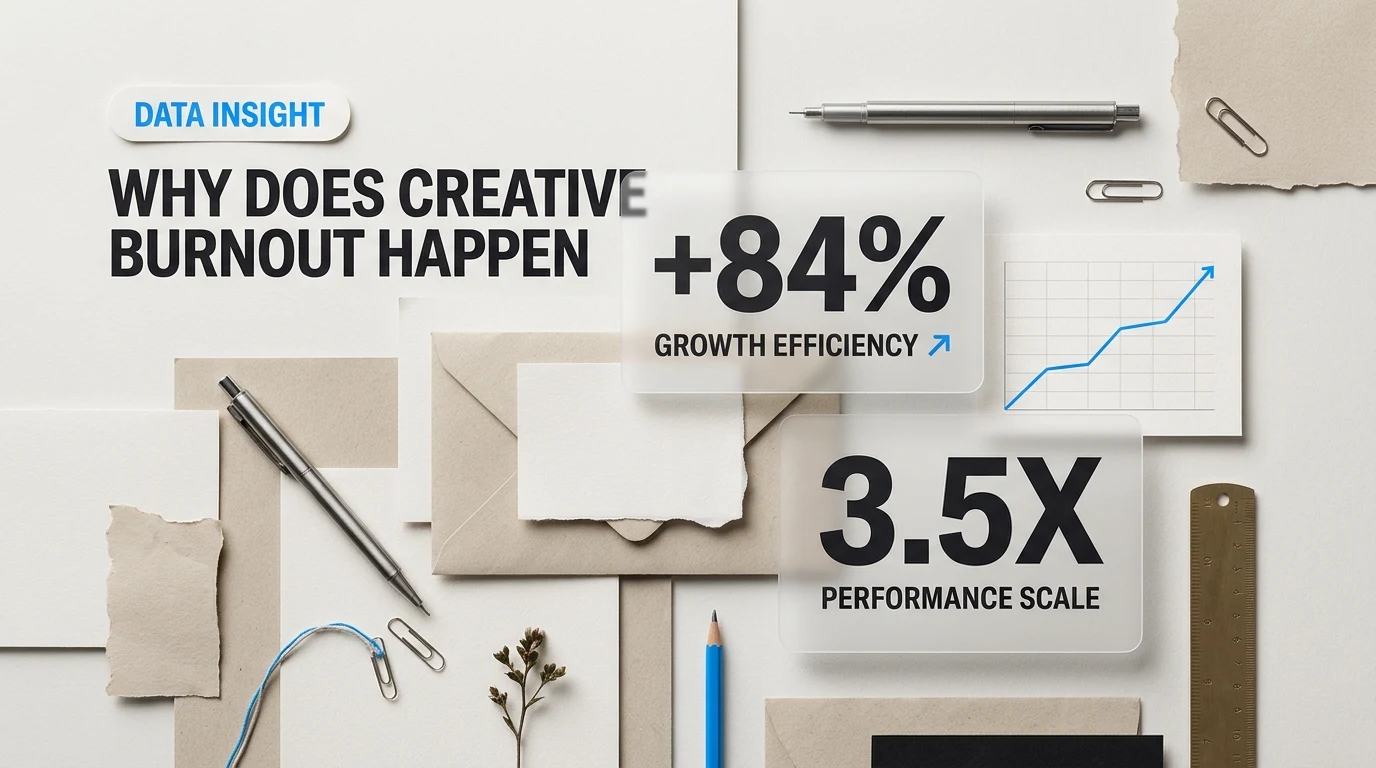
Why Does Creative Burnout Happen Even When You Love What You Do?
Loving your craft feels like bulletproof armor against fatigue. It isn’t. When passion powers your day job, the boundary between who you are and what you produce fades away. You pour your heart into writing, illustrating, or designing without watching the gauge. Then, without warning, the well dries up. Sitting down to work makes your thoughts feel dull and heavy.
One creator in an honest Reddit discussion on artistic paralysis described this exact wall as feeling “zombie-ish and numb-minded” after years of genuine love for writing. That sudden numbness is not a moral failing. It is your nervous system pulling the emergency brake after months of unmetered output.
When you monetize personal expression, your sanctuary becomes an assembly line. Play turns into performance. You start judging unfinished sketches or rough drafts by their market value or social engagement. This shift traps your brain in fight-or-flight mode. Over time, that constant background tension can trigger a debilitating motivational slump that lasts for weeks or months.
In the video above, the creator breaks down why we must stop mistaking genuine exhaustion for laziness. Forcing yourself to grind through depletion only deepens the mental freeze, keeping you stuck far longer than necessary.
Dopamine Depletion and the Biology of Recovering from Creative Burnout
Creativity relies heavily on dopamine. Think of dopamine as the fuel injection in your car’s engine. It provides the kick of excitement that makes exploring a new idea feel thrilling. Every breakthrough, solved design problem, or burst of positive feedback delivers a tiny chemical reward. But your brain cannot produce these neurochemicals indefinitely without replenishment.
If you keep hitting the gas pedal without refueling, the tank runs empty. You enter a state of neurochemical debt. The very tasks that used to electrify your imagination start triggering an aversion response. Successfully recovering from creative burnout requires treating this condition as a biological deficit rather than a lack of willpower.
Hyper-connectivity makes this biological depletion worse. You carry the world’s most accomplished portfolios directly in your pocket. As you stare at your screen trying to draft something fresh, algorithms feed you an endless stream of polished, viral masterworks. Unconscious comparison sets in. Your inner critic demands perfection before you even sketch the first rough outline.
| Dynamic | Healthy Creative Expression | Burnout Overdrive |
|---|---|---|
| Internal Motivation | Curiosity and genuine joy in discovery. | Fear of irrelevance and output anxiety. |
| Handling Rest | Time away feels natural and refreshing. | Guilt, panic, and persistent restlessness. |
| Value Assessment | Separates self-worth from current results. | Equates human value entirely with productivity. |
Perfectionism convinces you that every piece must surpass your previous best. You raise the bar higher after every win, never pausing to celebrate or decompress. When output becomes your only source of self-respect, downtime feels dangerous. You resist taking real breaks, secretly believing that stepping away will ruin your momentum.
True creative recovery cannot begin until you separate your human dignity from your creative productivity.
Recognizing these traps helps you break through the cycle before it turns into chronic apathy. You didn’t lose your talent. You simply drained your internal reserves by treating your imagination like a machine that never needs to power down.
What Is the Cognitive Reset Framework for Restoring Artistic Energy?
Staring at a blank canvas or an empty document during a prolonged motivational slump feels like revving a car engine with an empty fuel tank. You press the pedal harder. The engine sputters, then goes silent. Online creative communities often describe this exact state as having a “blank mind with no thoughts,” where your once-vibrant imagination feels completely drained. When your mental bandwidth hits zero, willpower won’t save you.
Most creators attempt to fight exhaustion with brute force. They set earlier alarms, set strict timers, and stare at the wall until frustration turns into shame. That strategy backfires because mental depletion is not a discipline issue. It is a biological redline. To rebuild genuine creative drive, you must shift your entire operating system away from constant generation and toward deliberate neurological repair.
A Cognitive Architecture for Recovering from Creative Burnout
When you are recovering from creative burnout, your brain cannot simply leap from exhaustion to effortless creative flow. True restoration follows a clear rhythm. You have to step through distinct stages to clear mental static before your subconscious can start assembling fresh ideas again.
| Standard Exhaustion Trap | The Cognitive Reset Method |
|---|---|
| Doomscrolling social media while feeling guilty about unfinished projects. | Low-stimulation downtime that completely unplugs your attention from feeds. |
| Demanding immediate, high-value output every time you sit at your desk. | Protecting incubation periods where your subconscious works without pressure. |
| Consuming fast-paced, noisy digital media to hunt for quick inspiration. | Immersing your senses in slow, intentional input with zero commercial intent. |
This framework rests on three primary levers that quiet your nervous system and reactivate your natural capacity to innovate.
Breaking the Dopamine Loop with Low-Stimulation Rest
Real rest is remarkably quiet. Collapsing onto the sofa to watch rapid-fire videos or scroll through discussion forums does not recharge a spent mind. In fact, rapid digital consumption keeps your sensory circuits on high alert, flooding your system with micro-spikes of dopamine that leave you feeling more drained than before.
To reset your baseline, you need periods of near-zero stimulation. One practical approach discussed by creators is the Doing Nothing Protocol shared on Reddit, which strips away external inputs so your brain can finally clear its working memory. That means taking twenty minutes to sit on your porch without headphones, watching rain hit a windowpane, or taking a slow walk around the block while leaving your phone on the kitchen counter.
Rest is not a reward you negotiate after your work is finished. It is the raw material that makes deep creative work possible in the first place.
When you remove the barrage of notifications and visual noise, your brain shifts out of reactive panic. Your heart rate settles. Your nervous system exits fight-or-flight mode, creating the psychological safety required for original thought to return.
The audio series above demonstrates how nervous system down-regulation and sound therapy can ease chronic tension. Soothing soundscapes help calm the hyperactive mental state that keeps so many burned-out professionals awake at night, giving your brain the physical peace it needs to reset.
The Power of Subconscious Incubation
Psychologists have long recognized that breakthrough thinking rarely happens while staring directly at a problem. Graham Wallas famously outlined this dynamic in his classic four-stage model of creativity: preparation, incubation, illumination, and verification. Incubation is the stage modern culture constantly forgets.
During incubation, you step away from the project entirely. You don’t take notes. You don’t brainstorm. You go bake bread, tend to houseplants, or organize a messy tool drawer. While your conscious mind focuses on these basic sensory tasks, your subconscious continues to scan your memories, quietly cross-referencing past experiences and assembling unexpected connections.
Think of your subconscious mind like a slow-cooking stew. You cannot rush the simmer by turning the heat up to maximum; doing that only scorches the pot. Stepping away lets the flavors blend behind the scenes. When an unexpected solution or a sudden burst of motivation finally hits you in the shower, that is simply incubation reaching the illumination stage.
Refilling the Reservoir Through Intentional Input
Forced output empties your internal reservoir. If you want to succeed in recovering from creative burnout, you must deliberately turn off the output faucet and open the intake valve. You cannot produce meaningful work when your inner library is completely bare.
Intentional input means taking in art, literature, textures, sounds, and nature without any hidden agenda. You don’t read a book to write a summary about it. You don’t visit an art exhibit to take photos for your portfolio. You explore simply to feel wonder again.
Notice how small details catch your eye: the way afternoon light hits a brick wall, the texture of weathered wood, or the tempo of a jazz track. When you collect sensory impressions without demanding that they become immediate projects, your mind starts playing again. Play is the birthplace of all sustainable creative work.
How to Begin Recovering from Creative Burnout: A Step-by-Step Implementation Guide
Facing a six-month motivational slump can leave you feeling completely depleted. Sit down at your desk, and your brain turns to static. Many artists describe feeling numb-minded or like a zombie whenever they try to pick up their tools after months of relentless output. When you reach that wall, willpower stops working. Forcing your way through exhaustion only turns a temporary creative dip into long-term fatigue.
You need a gentle, deliberate ramp to restore your vitality. Healing requires low stimulation, patience, and clear boundaries rather than aggressive production goals. As creators noted in a Reddit productivity discussion on creative numbness, trying to schedule your way out of total depletion rarely works. Real progress begins when you stop demanding immediate output and give your nervous system room to settle.
A Phased Blueprint for Recovering from Creative Burnout
Think of your mental energy like a garden bed. If you harvest crops continuously without refreshing the soil, the ground turns to dry dust. Planting more seeds won’t help; you have to let the field sit fallow and replenish the soil first. Use this four-phase roadmap to rebuild your artistic stamina without triggering another crash.
| Phase | Primary Focus | What to Cut | What to Practice |
|---|---|---|---|
| 1. Sensory Detox | Quiet nervous system overload | Podcasts, endless feeds, background noise | Silent walks, deep sleep, quiet sitting |
| 2. Digital Guardrails | Protect mental bandwidth | Notifications, comparison loops, instant replies | Hard offline cutoffs, phone-free mornings |
| 3. Non-Monetized Play | Rekindle pure joy | Client expectations, metrics, critique | Ugly sketches, unrecorded jams, zero stakes |
| 4. Gentle Re-Entry | Rebuild creative rhythm | Four-hour marathon work sprints | 15-minute micro-sessions, easy wins |
Step 1: Execute an Acute Sensory Detox
Modern exhaustion stems as much from input overload as it does from heavy output. Every email notification, short-form video clip, and news bulletin chips away at your remaining attention span. For the first seventy-two hours of your reset, slash passive intake to the bone.
Take walks without headphones. Let the ambient noise of birds, wind, and city traffic fill your awareness instead of a true-crime podcast or industry interview. Stare out the window while your morning tea brews instead of reaching for your phone. When you remove synthetic dopamine hits, your thoughts initially feel uncomfortably loud. Give it forty-eight hours. That quiet space is where your nervous system finally drops its guard.
Step 2: Establish Fierce Digital Guardrails
You cannot heal in the exact environment that drained you. Creative exhaustion often deepens because we keep one hand in the digital stream while trying to rest with the other. Scrolling through other creators’ finished masterpieces while you struggle to produce anything breeds paralyzing self-criticism.
Set a strict digital curfew. Dock your phone in another room by 8:00 PM. Ban all screens from your first waking hour. Turn off non-essential notifications on your computer, especially those tied to professional feedback or social feeds. When you treat your attention like precious real estate, you stop giving away mental energy for free.
Visualizing practical strategies from seasoned professionals helps demystify the road ahead. The video above offers clear, compassionate methods to dismantle creative blocks and stop perfectionism from stalling your progress.
Step 3: Rediscover Non-Monetized Play
When every sketch, melody, or paragraph must yield client approval, social media engagement, or revenue, your imagination feels like a trapped factory worker. Crafting under constant financial or peer scrutiny turns personal joy into performance anxiety.
“The fastest way to break a motivational slump is to make something terrible on purpose. Create with zero intention of sharing, selling, or judging it.”
Pick up a medium outside your professional trade. If you write technical copy, play with watercolor paints. If you compose music for commercial clients, bake artisan bread or sculpt clay. By engaging in hobbies with zero financial value, you reconnect with simple curiosity. You remind yourself that creating is an enjoyable human act, not just an economic transaction.
Step 4: Rebuild Routine Through Micro-Engagements
When you feel your energy returning, avoid the temptation to dive into an eight-hour creative marathon. Your creative endurance is fragile right now. Overworking too soon risks triggering an immediate relapse that sends you back to square one.
Commit to a tiny, non-threatening micro-session. Sit with your work for just ten minutes each day. Write a single descriptive paragraph, mix two paint colors on a palette, or draft three lines of melody. When the ten-minute timer rings, step away, even if you feel like continuing. Ending your session on a positive note leaves you eager to return tomorrow. Through these small, consistent steps, recovering from creative burnout becomes an organic rhythm rather than an uphill battle.
How Do Daily Micro-Habits Protect Mindset and Prevent Creative Relapse?
Big overhauls rarely cure an artistic freeze. When you spend months dragging yourself through a brutal motivational slump, trying to rebuild your routine overnight usually backfires. Your nervous system is already frayed. Piling on rigid productivity regimes just sets up another painful crash. Lasting healing comes from almost invisible shifts that you repeat until safety and curiosity return.
One practitioner sharing their journey on Reddit noted how the simplest daily habits that drive meaningful transformation often look too small to matter at first. Yet these quiet steps create the emotional floor that keeps you from tumbling back into despair.
Micro-Routines for Recovering from Creative Burnout Without Relapsing
Rigid time management treats your mind like a machine that produces identical output every hour. Humans don’t work that way. When recovering from creative burnout, your internal battery behaves erratically. One day you wake up ready to sprint; the next day, writing a single email feels like rolling a boulder uphill.
Energy-based time blocking replaces strict hours with biological bandwidth. Instead of forcing deep creative work between 9:00 AM and noon, you sort your tasks by how much emotional gasoline they burn.
| Energy Zone | Mental State | Aligned Recovery Action |
|---|---|---|
| High Clarity | Calm, rested, open focus | Exploratory drafting, unstructured concept mapping |
| Steady Rhythm | Alert but low emotional drive | Organizing reference files, administrative duties, editing |
| Depleted | Brain fog, irritation, heavy limbs | Guilt-free walking, sensory rests, lying on the floor |
Match the day to your actual capacity. If your battery shows twenty percent, do not attempt an eighty-percent task. Honoring that boundary shows your mind that you won’t sacrifice your well-being for deadlines anymore.
Escaping the Freeze Response with Somatic Micro-Habits
Deep fatigue often locks creators into a freeze state where opening your workspace triggers immediate anxiety. You want to make things, but your body treats the desk like a threat zone. Regulating the body must happen before you try to force inspiration.
The video above outlines simple somatic shifts that reset an overstimulated system. Getting outdoor light in your eyes early in the morning, shifting your posture, and cooling your face help tell your nervous system that you are safe right now. When physical tension drops, mental paralysis begins to ease.
Intentional Idleness and Low-Stakes Analog Hobbies
Many creators eliminate social media or step away from client work only to find themselves panicking. Without constant noise, they wonder what they are supposed to do with their hands. That awkward silence is where your imagination actually regenerates.
Think of your mind like soil in a farm garden. If you plant heavy crops season after season without pause, the dirt turns to dry dust. Letting the field sit idle isn’t wasted time. It is how nutrients return to the earth.
“True idleness is not scrolling your phone on the sofa. It is giving your brain a total reprieve from evaluation, metrics, and judgment.”
Introduce analog pastimes that have zero connection to your professional output. If you are an illustrator, try baking bread. If you write words all day, take up clay modeling or prune houseplants. Keep these activities strictly private:
- Never photograph your analog hobby for social media feeds.
- Do not turn your pastimes into potential side businesses.
- Allow yourself to make clumsy, ugly, imperfect things without correcting them.
- Stop tracking time or counting reps while you play.
These tactile moments teach you to enjoy making things again simply for the sensory joy of the process. They build a firewall around your curiosity. Over time, that playful mindset bleeds back into your main work, keeping the dread away for good.
What Are the Measurable Markers of a Successful Creative Renewal?
You don’t wake up one morning with a brass band playing outside your window to announce your mind is healed. Authentic recovery is quiet. When an artist finally breaks through a 6-month motivational slump, the turnaround doesn’t look like an explosion of manic energy. It feels more like taking off a heavy backpack you forgot you were carrying. Your shoulders drop. Your breathing slows down. The background panic fades away.
During the worst phases of exhaustion, sitting down to work feels like dragging wet concrete uphill. Blank screens trigger dread, and self-doubt screams at high volume. When you start recovering from creative burnout, that internal friction begins to loosen. You stop fighting your own mind just to begin. The true measure of renewal isn’t how fast you pump out projects; it’s the ease and peace with which you return to your craft.
Tangible Milestones When Recovering from Creative Burnout
Many artists wonder whether a good afternoon is just a temporary fluke or a sign of lasting restoration. As shared across community discussions on recognizing creative burnout, creators often reach points where they despise everything they make and dread their workspaces. Moving beyond that dark corner produces reliable, observable shifts in your daily mental state.
| Experience Marker | During the Slump | Authentic Renewal |
|---|---|---|
| Starting Resistance | Hours of procrastination, physical tension, and severe avoidance habits. | Starting takes minimal negotiation; sitting down to work feels approachable. |
| Mental Bandwidth | Heavy brain fog, short temper, and overwhelming decision fatigue. | Calm mental focus; ability to evaluate choices without emotional paralysis. |
| Curiosity & Play | Apathy toward new ideas; everything feels like another burdensome chore. | Spontaneous fascination returns; you explore things just because they are fun. |
| Mistake Tolerance | A single error triggers feelings of worthlessness and defeat. | Errors feel normal; you treat bad drafts as necessary steps in the process. |
Curiosity is the canary in the coal mine for mental wellness. When you are depleted, wonder disappears first. You don’t have the spare energy to ask “what if?” because answering that question demands effort you don’t possess. When curiosity returns, you might pause on your morning walk to study the patterns of autumn leaves. You might open an old sketchbook just to mess around with watercolors without any intention of posting the result online. That spontaneous, unpressured interest signals real healing.
Listening to your body’s early stress signals helps you protect your regained energy. As explored in this podcast series on recognizing exhaustion early, paying attention to mental fatigue prevents you from tumbling straight back into chronic depletion.
The definitive sign of real recovery isn’t the volume of work you produce. It is the return of playfulness while making it.
Another unmistakable marker is the drop in cognitive stress. Burnout turns every tiny decision into a mountain. Which font looks best? What shade of blue should you mix? When exhausted, these questions feel impossible. After real recovery, decision fatigue dissolves. You trust your instincts again. You try an idea, alter it if it misses the mark, and keep moving without spiraling into panic.
Recovery leaves you with vital lessons that reshape how you work. You learn that your self-worth is not tied to your daily output. You realize that rest isn’t a reward you only earn after complete exhaustion, but an active part of your creative rhythm. These changes create a steady, resilient foundation that keeps your drive alive for years to come.
Sustaining the Spark: Embracing Rest as an Essential Phase of the Creative Cycle
Sustaining Energy: A Lifelong Framework for Recovering from Creative Burnout
Breaking out of a deep motivational slump doesn’t happen by force. It starts the exact moment you stop treating your imagination like a machine that owes the world constant output. When artists hit a wall, they often experience a cold panic. You might recognize the dread shared by makers who talk about feeling an empty void after losing their artistic vision. That hollow silence isn’t a permanent loss of talent. It is your nervous system pulling the emergency brake because your tank has been empty for months.
Creativity moves in natural seasons. Seeds stay buried in frozen ground throughout winter, gathering strength beneath the surface long before any green shoot appears. Your creative mind operates under the exact same rhythm. The real secret to recovering from creative burnout is learning to honor your dormant phases instead of fighting them. Taking time to step away, rest, and daydream is an active phase of generation, not a sign of weakness.
Separating your self-worth from daily output helps protect your mind against future crashes. The guide below breaks down how to navigate low-energy states and gently reset your focus without spiraling into guilt:
Music needs pauses between notes to create rhythm. Without silence, sound turns into grating noise. Your creative work functions the same way. The next breakthrough idea rarely strikes while you are frantically grinding at a desk. It surfaces on a quiet afternoon walk, during a relaxed conversation with a friend, or while watching rain hit the window. Give your mind room to wander without attaching a deadline to every thought.
True creative stamina isn’t about how long you can push through exhaustion. It’s about how gracefully you allow yourself to pause.
If you feel stuck right now, give yourself permission to drop the pressure. Breathe deeply. Read a great book for pure pleasure, sleep an extra hour, and let your curiosity breathe without an agenda. Your creative spark never truly leaves you. Once you clear away the exhaustion and make room for genuine rest, the fire returns stronger and clearer than before.