
How to Practice Intentional Living in a Distracted World
How to Practice Intentional Living in a Distracted World
You wake up to a blaring alarm, grab your phone, and lose twenty minutes to social media before your feet even touch the floor. You rush through your morning, react to urgent notifications all day, and collapse on the couch at night. If you constantly wonder how to practice intentional living in a distracted world, you aren’t alone. Most of us find ourselves trapped in this relentless cycle, feeling like passive passengers in our own stories.
Everyday burnout often stems from this default mode. In honest discussions across simple living forums about drifting through life on autopilot, people describe the numbing sensation of watching days blur together without real connection or joy. We spend hours reacting to external demands, inbox alerts, and social feeds. We end up trading our most valuable asset—our conscious attention—for brief, hollow distractions that leave us drained.
Living with intention flips that script. It isn’t about escaping society, throwing away your phone, or following a rigid morning routine. Real intentional living is simply the active alignment of your daily choices with your personal core values. It means you pause before saying yes, select your habits on purpose, and direct your focus toward what truly satisfies your soul. Instead of drifting through someone else’s agenda, you steer your own path.
Table of Contents
- Identifying Your Core Values to Build an Authentic Life Blueprint
- How to Practice Intentional Living Through Mindful Daily Habits
- Curating Your Mental Space: Digital Minimalism and Conscious Consumption
- Aligning Your Finances: Practicing Value-Based Spending and Mindful Wealth Habits
- Mastering the Graceful 'No': Boundary Setting to Protect Your Time and Energy
- How to Reset When Routine Disruptions Pull You Back into Passive Habits
- Cultivating an Enduring Practice: Living with Purpose Every Day
Breaking out of automatic patterns requires small, consistent mindset shifts. The guide below offers helpful, practical steps to help you wake up your mind and step out of passive routines:
Reclaiming your life begins the moment you realize you have choices. You don’t have to overhaul everything overnight. True personal growth happens in quiet, deliberate decisions: putting the phone down during dinner, protecting an hour for deep work, or taking three deep breaths before responding to an irritating email. Discovering how to practice intentional living provides the practical blueprint you need to stop merely surviving your days and start shaping them with clear purpose.
Identifying Your Core Values to Build an Authentic Life Blueprint
Most of us run our lives on borrowed scripts. We absorb career paths from parents, measure our worth against curated social feeds, and chase promotions we do not actually want. Then we wonder why checking every traditional box leaves us feeling empty inside. A community member on Reddit recently asked how to define a true core of values after realizing that standard advice like “just do what makes you happy” felt shallow. Happiness is a fleeting emotion. Values are your permanent operating system.
If you don’t choose your values, the world assigns them to you. When you run on factory default settings, everyone else controls your energy, your time, and your attention. Building an authentic personal blueprint requires peeling back those external layers so you can run your life with total clarity.
In this guide from Leah Smart, you get a clean breakdown of how to identify your guiding compass. Watching someone walk through the extraction process demystifies what can often feel like an overwhelming, abstract self-help exercise.
A Step-by-Step Values Audit Framework
To separate what you actually care about from what society told you to care about, work through this three-stage audit. Grab a blank notebook and turn off your phone notifications.
Stage 1: Strip Away the Inherited “Shoulds”
List every major goal you are pursuing right now. Next to each item, write down where the idea came from. Did you pick it, or did it come from a mentor, parent, partner, or social circle? Pay close attention to tasks accompanied by heavy guilt or dread. Guilt is usually proof that you are living out someone else’s script.
Stage 2: Evaluate Peak and Friction Experiences
Think back over the past two years. Pinpoint three moments when you felt deeply alive, energized, and fulfilled. What were you doing? Who was with you? Write down the quality behind that moment, like freedom, craftsmanship, or deep connection.
Now do the reverse. Identify three moments of acute frustration or burn-out. Friction happens when an environment violates a fundamental belief. If micromanagement drives you mad, autonomy isn’t just a preference for you; it’s a foundational requirement.
Stage 3: Distill to Four Non-Negotiables
You cannot have twenty priorities. If everything matters, nothing does. Group your observations into four core buckets. Give each bucket a clear, personal name rather than a generic buzzword.
| Inherited Expectation | Authentic Core Value | Everyday Realignment |
|---|---|---|
| Climbing the corporate ladder for prestige. | Autonomy and creative problem-solving. | Saying no to promotions that require endless administrative bureaucracy. |
| Buying a giant house in the suburbs to show status. | Financial peace and open time. | Living below your means to avoid mandatory sixty-hour work weeks. |
| Saying yes to every social invite out of politeness. | Deep, focused relationships. | Declining shallow group gatherings to spend quality evenings with close friends. |
Applying a Personal Filter: How to Practice Intentional Living Through Daily Choices
Your values are completely useless if they stay trapped on a piece of paper. They must become your front-line defense mechanism against daily demands. When opportunities, invitations, or conflicts arise, run them through a simple filter:
“Does accepting this request serve one of my four core anchors, or am I doing it to avoid temporary discomfort?”
If an invitation doesn’t align with your blueprint, your answer is an immediate no. That saves you hours of mental wrestling. You don’t have to debate whether to join that extra committee or spend money on that trendy gear. Your filter makes the call for you.
When you master your blueprint, learning how to practice intentional living stops feeling like rigid self-discipline and starts feeling like natural self-respect. You trade cheap external approval for lasting internal calm.
How to Practice Intentional Living Through Mindful Daily Habits
Autopilot steals our days in silence. Most of us wake up and reach immediately for a buzzing smartphone. Within ninety seconds, dozens of unread notifications, news headlines, and urgent requests flood our awareness. In a distracted world, purpose never happens by chance. You have to build it brick by brick. You don’t need an exhausting, three-hour routine to see a difference. Learning how to practice intentional living begins with reclaiming tiny daily pauses from unconscious habit loops.
Designing Dawn: How to Practice Intentional Living at Sunrise
Many people assume an intentional morning requires waking up at dawn, running ten miles, and drinking green juice in total silence. That rigid standard usually sets you up for disappointment. True mindfulness is far simpler and gentler. As highlighted in a simple morning awareness routine shared on Reddit, you can anchor your day simply by noticing your breath and relaxing physical tension before ever climbing out of bed.
“Before you get out of bed, notice your breath. Observe any tension in your body and gently release it. Set an intention for how you want to show up today.”
Try swapping reactive phone habits with these three micro-actions tomorrow morning:
- The Thirty-Minute Tech Fast: Keep your phone outside your sleeping space. Give your nervous system thirty quiet minutes after waking before you interact with the outside world.
- Tactile Hydration: Drink a tall glass of water with full attention. Notice the temperature of the glass, the sound of the pour, and the sensation of waking up from the inside out.
- The Primary Priority: Pick just one meaningful task you will complete today. When everything feels urgent, choosing one non-negotiable goal keeps your energy centered.
In this video, author Joshua Becker outlines practical steps to break free from passive routines and dedicate your finite hours to what genuinely matters.
Conscious Bridges: Transition Rituals Between Work and Rest
Why do so many of us feel drained long after the workday ends? We carry emotional fixation and mental clutter straight from our desks to our dinner tables. When work and rest blur together, peace evaporates. You end up existing in a constant state of low-grade anxiety, never fully engaged at work and never fully relaxed at home.
A transition ritual acts as an airlock between two distinct worlds. It signals to your nervous system that production mode has ended. You don’t need hours for this. Five minutes is enough to create a clear border.
| Moment | The Autopilot Default | The Mindful Alternative |
|---|---|---|
| Workday Shutdown | Leaving work tabs open and replying to emails throughout dinner. | Closing every browser tab, shutting the laptop lid, and walking outside for five minutes. |
| Lunch Break | Eating a sandwich at your keyboard while scrolling short-form videos. | Stepping away from screens to savor your food and let your mind wander freely. |
| Evening Wind-Down | Binge-watching television shows until falling asleep on the sofa. | Dimming overhead lights an hour before bed and reading physical pages. |
Single-Tasking as an Everyday Discipline
Multitasking is a myth. You cannot focus deeply on two cognitively demanding things at the same time. What you’re actually doing is task-switching at high speeds. Think of your brain like a smartphone battery: running fifteen heavy apps in the background drains power rapidly. Closing out background processes leaves your mind sharp and calm.
Anchor purposeful action into your schedule with three simple single-tasking boundaries:
- Practice the Single-Tab Rule: When writing, researching, or completing an administrative task, keep only the active window open. Hide bookmarks, turn off notifications, and silence message alerts for forty-minute bursts.
- Eat Without Screens: Treat meals as sensory experiences rather than background activities for content consumption. Notice the textures, aromas, and flavors of your food.
- Listen with Both Ears: When speaking with family or colleagues, set your phone face down. Give them your undivided visual presence.
Every single time you catch yourself drifting into mental chatter and consciously choose to return your attention to the task right in front of you, you strengthen your focus. That quiet focus is the real secret behind genuine self-direction.
Curating Your Mental Space: Digital Minimalism and Conscious Consumption
Our brains were never built to process hundreds of headlines, direct messages, and bite-sized video clips before breakfast. Every red notification badge acts like a quiet alarm bell ringing in your head. You pick up your phone to check the weather. Twenty minutes disappear as you read arguments between total strangers in an Instagram comment thread. That persistent haze behind your eyes is not ordinary tiredness. It is cognitive overload caused by unfiltered consumption.
Decluttering Your Tech: How to Practice Intentional Living Online
When people explore how to practice intentional living, they often begin by clearing physical closets or organizing kitchen shelves. Yet your digital environment requires the exact same scrutiny. Your phone screen is prime real estate in your consciousness. If you crowd it with algorithms designed to provoke outrage and impulse shopping, your attention will scatter.
Digital minimalism is not about abandoning technology or living in a cabin off the grid. It is simply deciding who controls your attention: you or an engagement engineer. As members of the online digital minimalism community frequently point out, real peace in modern life requires setting boundaries around what gets permission to interrupt your day.
Filtering your digital environment follows the exact principle of deciding what belongs in your physical home. When you eliminate media that sparks mindless comparison, you create room for deep creative thought and presence.
To understand where your cognitive energy leaks, compare standard reactive phone usage with intentional habits:
| Passive Default Habit | Intentional Alternative |
|---|---|
| Checking feeds immediately upon waking up in bed. | Keeping chargers outside the bedroom and using a standalone alarm clock. |
| Leaving push notifications on for news, social feeds, and shopping apps. | Silencing all alerts except real-time phone calls from close family. |
| Scrolling infinite video feeds during brief pauses, elevator rides, or lines. | Letting your mind wander in silence or carrying a pocket notebook. |
| Following accounts that trigger lifestyle envy or shopping impulses. | Ruthlessly unfollowing anyone who prompts a feeling of inadequacy or urgency to spend. |
Three Friction Rules to Reclaim Daily Focus
You cannot rely on pure willpower to fight devices engineered by thousands of software experts. You must create intentional friction instead.
Strip the visual reward. Switch your smartphone display to greyscale. Colorful icons are digital candy engineered to stimulate dopamine receptors. Once your screen turns to shades of slate and grey, social media feeds instantly lose their hypnotic pull. The phone becomes a practical utility tool rather than an amusement park.
Enforce temporal borders. Guard the first sixty minutes of your morning and the final hour of your evening. When your eyes open, your subconscious mind remains impressionable. Absorbing urgent work emails or breaking political news first thing locks your nervous system into a reactive posture that lasts all day. Protect that opening window for hydration, movement, and silence.
Purge your mental inputs every Sunday. Take five minutes each weekend to unsubscribe from promotional email blasts that tempt you with flash sales. Unfollow social profiles that make you question your appearance, career speed, or home decor. Treat your mental space with the same respect you give your physical home, refusing to let outside noise clutter your inner peace.
Aligning Your Finances: Practicing Value-Based Spending and Mindful Wealth Habits
Money is rarely just math. It represents your life energy, your traded hours, and your freedom. In a distracted world engineered to trigger instant checkout clicks, personal finance easily slips into passive drift. Deliveries arrive at your front door for items you barely remember ordering. The temporary rush fades quickly, leaving behind a depleted bank account and quiet clutter.
Understanding how to practice intentional living requires bringing this autopilot spending to a halt. When you direct your money with clear intent, cash stops being an emotional band-aid. It turns into a tool that supports your personal security and long-term peace of mind.
How to Practice Intentional Living Through Value-Based Budgeting
Most traditional budgets fail because they feel like punishment. Counting every cent creates guilt and friction. Value-based spending flips the entire script. Instead of asking what you must give up, you ask what you genuinely want your money to build.
Participants in the simple living forum discussion on financial habits frequently point out that lasting peace comes from clarity, not constant spreadsheet anxiety. The core principle is straightforward: spend money on what you value, and cut back without shame on the rest.
| Dimension | Impulsive Consumerism | Mindful Wealth Habit |
|---|---|---|
| Primary Trigger | Boredom, stress, and targeted digital ads | Clear personal priorities and genuine utility |
| Purchase Timing | Instant gratification via one-click ordering | A deliberate pause to assess true need |
| Emotional Impact | Fleeting thrill followed by buyer remorse | Deep satisfaction and calm financial margin |
| Ultimate Goal | Collecting possessions to project status | Buying back time, sovereignty, and quiet days |
Trimming the excess isn’t about self-deprivation. It’s about making room for experiences and security that genuinely matter to you. The video below illustrates how paring down unneeded expenses opens the door to personal autonomy far faster than endless consumer upgrades ever could.
How do you shift everyday financial behavior toward this mindset? Start with three simple, friction-building practices:
- The 48-Hour Wishlist Buffer: When you want an unplanned non-essential item, add it to a notes document instead of your cart. Wait two full days. If the urge fades, you just saved money without feeling deprived.
- Life-Energy Pricing: Translate monetary costs into working hours. If an item costs one hundred dollars and you earn twenty-five dollars an hour after taxes, decide if that purchase is worth giving up four hours of your limited life.
- Pay Your Future Calm First: Set up an automatic transfer on payday straight into your emergency cushion or investments. What you don’t see sitting in your checking account, you won’t spend mindlessly.
“True wealth isn’t about displaying possessions to impress strangers. It’s waking up knowing your choices belong entirely to you.”
Every dollar you spend is a silent vote for the kind of life you want to live. Stop financing routines that leave you exhausted. When you align your checking balance with your inner values, you create breathing room. That margin gives you the power to choose how you show up each day.
Mastering the Graceful 'No': Boundary Setting to Protect Your Time and Energy
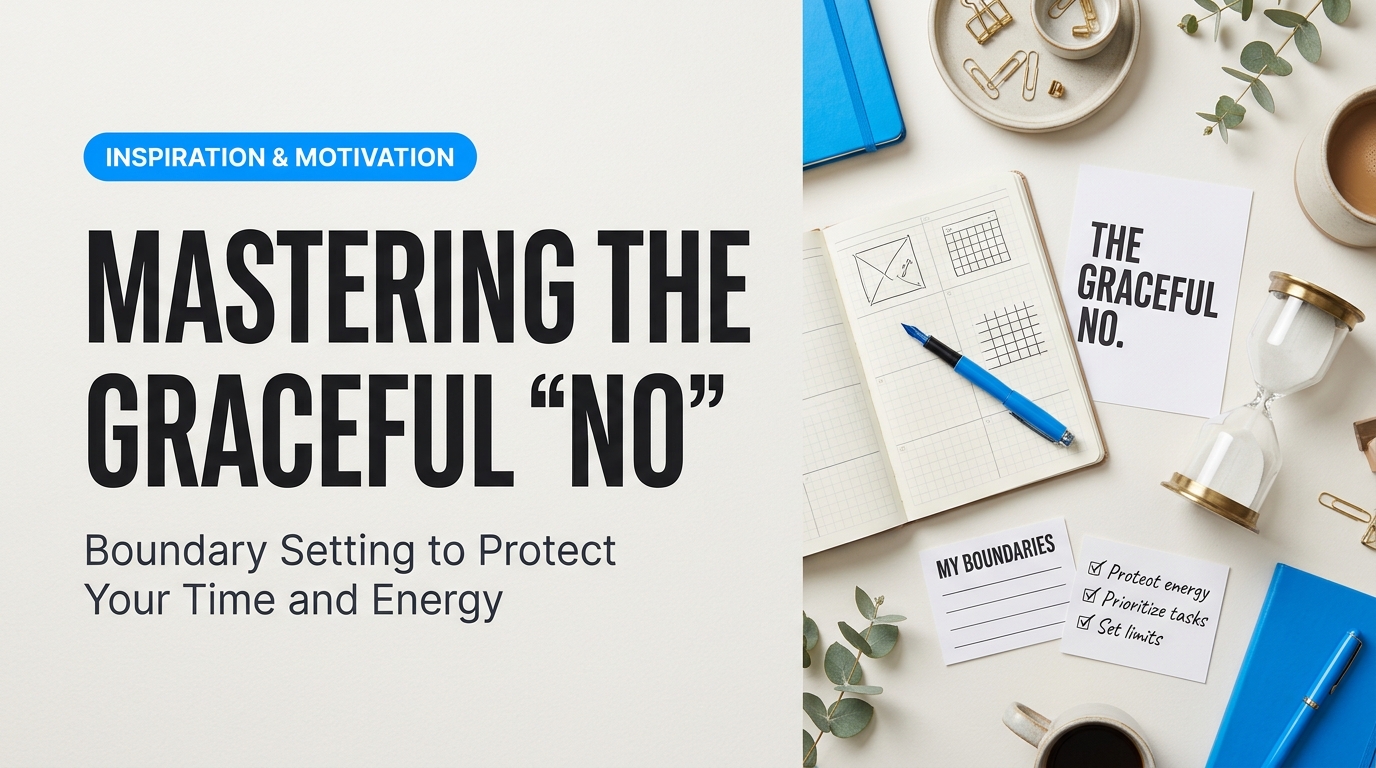
Every time you agree to an obligation that drains you, you borrow against your own peace. Most people-pleasers don’t overcommit because they crave endless work. They do it because saying yes provides immediate relief from social friction. Saying no triggers a sudden spike of discomfort, while saying yes brings immediate approval—followed by weeks of slow, simmering resentment. When you discover how boundaries safeguard mental health, you realize that an unchecked schedule isn’t generosity. It’s simply avoidance.
In a distracted world full of competing demands, an open calendar invites other people to dictate your priorities. If you don’t decide where your attention goes, someone else will gladly spend it for you.
Mental Models on How to Practice Intentional Living Through Clear Limits
Learning how to practice intentional living requires treating your energy like a finite bank account. You cannot spend the same twenty dollars twice. You also cannot spend the same Tuesday evening writing your book and attending a committee meeting you secretly dread. Every single commitment carries a hidden tax paid in mental quiet, sleep, and presence with your family.
Many people struggle to hold the line because they fear coming across as cold or aloof. In community discussions on boundary setting, people frequently note that being soft-spoken makes firm limits feel unnatural, especially if they grew up in homes with porous or chaotic boundaries. As therapist Nedra Glover Tawwab points out in her work on boundary clarity, boundaries are not walls designed to shut others out. They are clear signposts showing people where the front door is.
The video above outlines subtle, calm ways to draw lines without defensive hostility. Protecting your space does not require dramatic confrontations. It simply demands clear, consistent language.
To decline requests without guilt or professional fallout, use tested phrases that eliminate room for negotiation:
- The Professional Trade-off: “I’d love to help with this project, but taking it on right now means delaying delivery on [Current High-Priority Project]. Which should I prioritize first?”
- The Helpful Resource Pass: “I don’t have the capacity to take this deliverable on right now, but I can share my workspace template so your team can build it out quickly.”
- The Social Soft-Decline: “Thank you for the invite! My weekends are completely booked for resting right now, so I won’t be able to attend.”
- The Hard Limit: “That sounds like a wonderful initiative, but it doesn’t fit with my current focus areas this quarter. I hope it goes smoothly!”
“Clear is kind. Unclear is unkind.” — Brené Brown
Notice what these scripts skip: elaborate excuses. When you offer long justifications like car trouble, feeling exhausted, or doctor appointments, you give people problems to solve. They will offer to move the meeting time, call an Uber, or reschedule for next week. A polite, absolute decline offers nothing to debate. It closes the loop with dignity.
After you decline an offer, you will likely feel a brief wave of guilt. Don’t panic. That discomfort is not evidence that you made a mistake. It is simply the emotional friction of unlearning a lifelong habit of chronic compliance. Sit with the awkward silence. Let the text message sit unanswered for ten minutes before hitting send. You aren’t being selfish when you decline requests that misalign with your values—you’re merely staying loyal to the life you’re trying to build.
How to Reset When Routine Disruptions Pull You Back into Passive Habits
Life gets messy. A week of sudden overtime, a lingering head cold, or a stretch of travel can wipe out your best habits. You wake up late, skip your morning journal, grab takeout for three nights straight, and find yourself doomscrolling on the sofa at midnight. Passive autopilot returns with a vengeance.
When this happens, your brain loves to sound the panic alarm. It tells you that because you broke the pattern, everything is ruined. That all-or-nothing trap keeps millions trapped in cycles of chronic burnout. As members often share in a candid community discussion on resetting after falling off your daily routine, trying to aggressively “catch up” on missed habits usually leads to immediate exhaustion. The only real remedy is restarting softly, dropping the pressure, and taking simple steps forward.
Troubleshooting Routine Drift: How to Practice Intentional Living During Chaos
Learning how to practice intentional living isn’t about maintaining an unbroken streak of picture-perfect mornings. Real mastery lies in the return. When external demands derail you, rely on these field-tested troubleshooting strategies to find your center again without beating yourself up.
| The Perfectionist Trap | The Intentional Living Reset |
|---|---|
| “I ruined my streak, so the rest of the week doesn’t count.” | “I drifted today. I’ll make a conscious choice on my next action.” |
| Trying to double workout times or study sessions to “make up” for lost time. | Shrinking expectations down to an easy, two-minute baseline habit. |
| Blaming lack of willpower and feeling deep personal guilt. | Recognizing environmental friction and adjusting routines to match current energy. |
When you are navigating high-stress seasons in a distracted world, your routines need shock absorbers. Think of your habits like flexible bamboo rather than brittle glass. If your habits can’t bend with real-world chaos, they will shatter.
To help you visualize gentle, grounded resets that cut through overwhelm, watch this practical walkthrough on re-anchoring your daily rhythm:
This breakdown illustrates how tiny physical adjustments—like drinking a glass of water before looking at notifications or setting an evening shutdown boundary—bring immediate clarity back into your schedule without demanding an exhaustive overhaul.
Run a 60-Second Micro-Reset
You don’t need a blank calendar or a fresh Monday morning to restart. You can reset right now in the middle of a disorganized afternoon. Use this three-step micro-reset whenever you realize you’ve drifted into auto-pilot:
- Drop the story: Stop replaying how productive you “should” have been this morning. Guilt consumes the exact cognitive energy you need to act right now. Take three slow breaths to bring your nervous system back down.
- Find your baseline floor: Strip your habits to their absolute minimum version. If your standard routine is a forty-five-minute gym session, your floor might be ten bodyweight squats while waiting for the kettle to boil. Keeping the behavioral identity alive matters far more than the volume.
- Anchor one physical cue: Clear off your desk, wash the dishes in the sink, or place your shoes by the door. Visible order signals safety to your brain, making conscious choices far easier than trying to summon pure willpower in a chaotic room.
“True discipline is never punitive. It is a quiet, forgiving commitment to come back home to yourself, no matter how many times you wander away.”
When routine disruptions pull you sideways, treat yourself like a friend navigating a storm. Understanding how to practice intentional living means welcoming the mess as part of the process. You haven’t lost your progress; your practice is simply waiting for your next mindful breath.
Cultivating an Enduring Practice: Living with Purpose Every Day
Living with deliberate purpose doesn’t mean building a flawless existence where nothing unexpected ever happens. Real life remains messy. Our schedules collapse, urgent demands monopolize our hours, and the constant digital noise of a distracted world tempts us to slip back into passive routines. That is completely normal. Learning how to practice intentional living is never about reaching a static finish line where your habits run forever on autopilot without conscious effort. It is an ongoing relationship with your personal values, requiring gentle course corrections whenever your focus drifts away from what matters most.
Visualizing this shift helps ground these abstract principles into your tangible, lived reality. This practical guide breaks down why committing to conscious choices shields your days from regret and keeps your daily actions aligned with what you value most:
Reframing How to Practice Intentional Living Through Small Daily Actions
People often stumble when they try to overhaul their entire existence overnight. We fall prey to the modern obsession with dramatic transformations, rigid morning routines, and intense productivity overhauls. As members pointed out in a thoughtful community discussion on building daily consistency, sustainable growth happens when you focus on tiny, accessible actions rather than heroic bursts of effort. Our culture celebrates intensity, but enduring peace thrives on repeatable, quiet habits.
Choose clarity today. Pause before answering messages that steal your focus. Spend your money on what enriches your relationships rather than fleeting status symbols. Protect your calendar with firm, kind boundaries that safeguard your emotional bandwidth.
You don’t need a fresh start or a new calendar year to begin. Start where you are. An authentic life isn’t defined by the speed at which you reach a goal. It is shaped by the courage to wake up, reject passive drift, and claim ownership of your present choices.
