
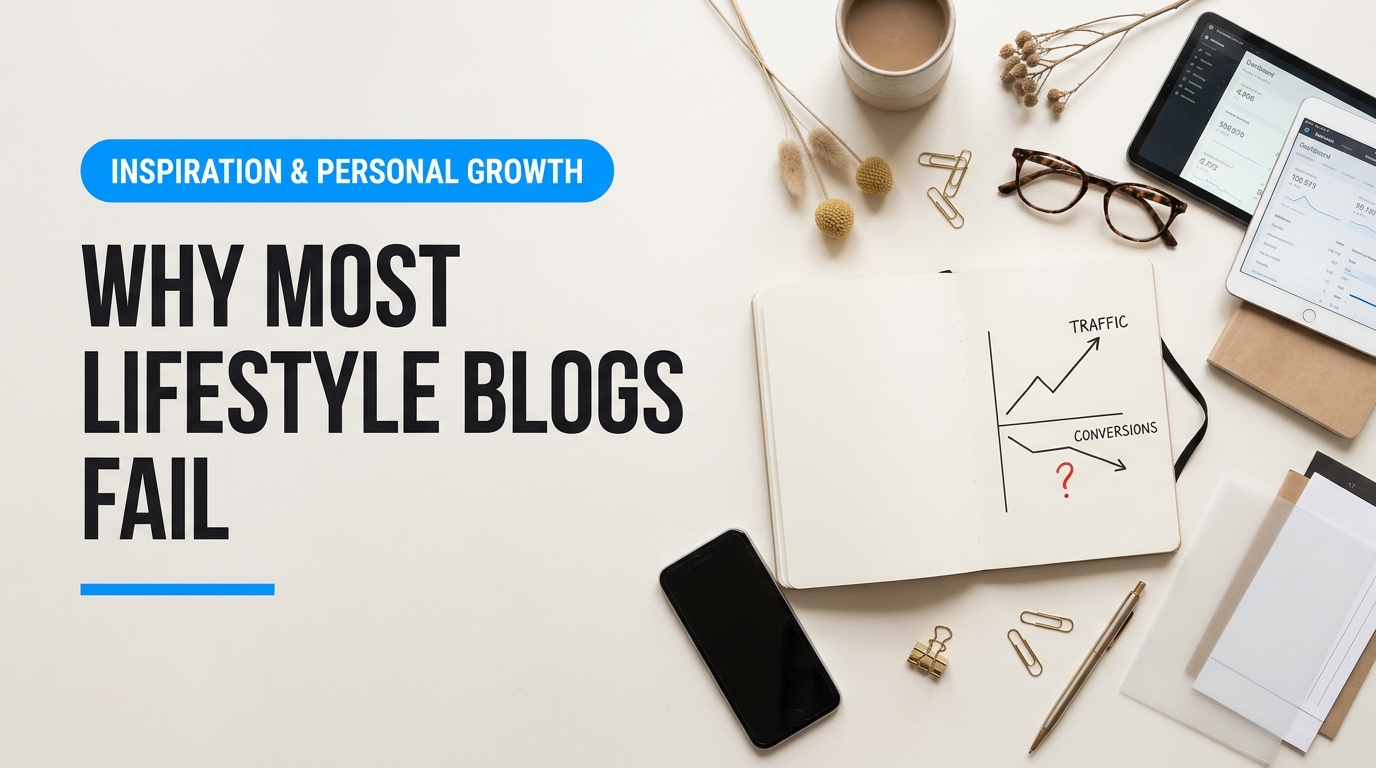
Why Most Lifestyle Blogs Fail to Convert Traffic
Why Most Lifestyle Blogs Fail to Convert Traffic – why lifestyle blogs fail to convert
You celebrate hitting one hundred thousand monthly readers, yet your bank account barely notices. It is the silent crisis behind why lifestyle blogs fail to convert into sustainable digital businesses. Most lifestyle blogs fail to convert traffic because they attract passive browsers instead of active buyers who need direct solutions to urgent problems. You publish daily routines, aesthetic photography, and heartfelt reflections, but these casual impressions rarely turn into reliable affiliate sales or digital product checkouts.
Table of Contents
- The High-Traffic Mirage: Why Relatable Lifestyle Content Isn't Paying the Bills
- Myth 1: Does High Traffic Automatically Translate to Reliable Blog Revenue?
- Why Lifestyle Blogs Fail to Convert When Treating Niche Specificity as a Restriction
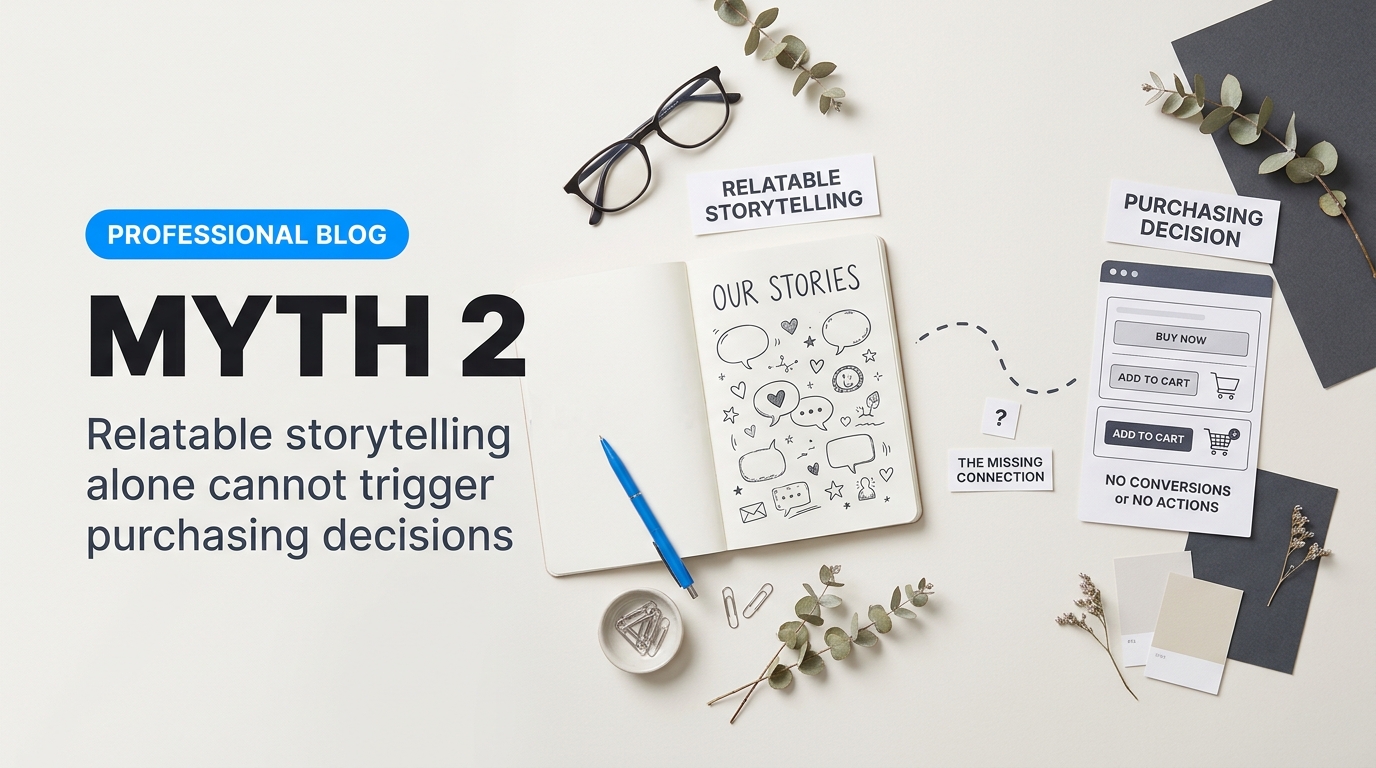
- Myth 2: Why Relatable Storytelling Alone Cannot Trigger Purchasing Decisions
- Why Does Aesthetic Blog Design Conceal Critical Conversion Funnel Failures?
- How to Pivot from Passive Lifestyle Pageviews to an Intent-Driven Revenue Engine
- Building Lasting Authority: Moving from Lifestyle Chronicle to Conversion Machine
Vanity metrics lie. High pageview spikes from Pinterest or social media look great in media kits, but they don’t cover payroll. Lifestyle publishing long operated on an outdated promise: assemble a crowd first and monetize them later through display networks or spontaneous brand partnerships. That playbook is broken. Today, display ad rates fluctuate wildly, readers ignore banner ads entirely, and third-party tracking shifts make passive monetization an uphill battle.
This monetization gap sparks intense debate across publisher communities. When founders examine their numbers in discussions evaluating lifestyle traffic returns, the sentiment is consistent: raw visitor volume without purchase intent creates burnout instead of profit. A post detailing a morning skincare regimen might earn thousands of likes, but readers consume it as casual entertainment. They admire the aesthetic, close the tab, and return to their day without taking action.
To understand the breakdown, look at how you measure user activity. Platforms like Google Analytics 4 record user sessions and raw pageviews, but standard reports do not tell you whether those visitors intend to buy. Integrating qualitative heatmaps through Hotjar or event-driven tools like Fathom Analytics quickly exposes the problem. Visitors scroll casually through personal stories, bypass call-to-action buttons, and bounce before ever reaching a product page. Understanding why lifestyle blogs fail to convert starts with recognizing that traffic volume and commercial intent are two entirely different assets.
Myth 1: Does High Traffic Automatically Translate to Reliable Blog Revenue?

Big numbers trick creators. You log into your analytics dashboard, see one hundred thousand monthly pageviews, and assume the money will naturally follow. It rarely does. Most creators discover this brutal reality only after months of grinding. Ten thousand casual readers rarely generate the revenue of a hundred focused buyers.
The belief that high traffic guarantees reliable income is the most expensive trap in digital publishing. When creators complain about abysmal affiliate sales or digital product flops on marketing discussion threads about traffic conversion traps, they usually point fingers at their offer. They change the button color. They rewrite the headline. But the offer isn’t the real culprit. The visitor’s mindset is.
The Intent Gap: Why Lifestyle Blogs Fail to Convert Passive Readers
Think about how you browse a glossy magazine in a dentist’s waiting room. You flip through colorful photos, skim a quick morning routine, and look at living room decor ideas. You’re killing time. You’re relaxed, distracted, and mildly entertained. If an advertisement on page twelve asks you to buy a seventy-dollar meal planning guide, you turn the page without thinking twice. You never came to shop.
Now picture walking into a hardware store on a Sunday morning because a pipe burst under your kitchen sink. You aren’t browsing. You’re desperate for a specific fix, holding your wallet in your hand, ready to pay whatever it costs to stop the leak. That is commercial intent.
That fundamental mismatch is the primary reason why lifestyle blogs fail to convert massive audiences into sustainable income. Lifestyle content attracts waiting-room readers. They show up via Pinterest boards, Instagram stories, or casual search terms while sitting on the couch after dinner. They want light inspiration, not solutions to urgent problems. When you ask them to pull out a credit card, you disrupt their relaxation. They bounce.
| Audience Dimension | Passive Entertainment (Lifestyle) | Transactional Commercial (Problem-Solving) |
|---|---|---|
| User State | Leaning back, browsing, seeking visual inspiration | Leaning forward, hunting for a specific tool or solution |
| Search Queries | “Cozy autumn vibes”, “morning routine ideas” | “Best noise-canceling headphones for open offices” |
| Bounce Rate | High (75% – 90% single-page visits) | Moderate (explores reviews, pricing, and comparisons) |
| Monetization Path | Pennies per pageview via low-RPM display ads | High-ticket affiliate payouts, consulting, targeted software |
Unmasking Your Numbers with Intent Analytics
How do you diagnose whether your traffic is commercial or purely recreational? Standard platforms like Google Analytics 4 will show you raw session totals, but they won’t tell you the emotional context of those sessions. You need tools that reveal behavior and purchase intent.
Keyword research tools like Ahrefs or Semrush classify search queries by intent: informational, navigational, commercial, or transactional. If ninety percent of your incoming organic keywords fall under broad informational categories, your visitors don’t care about buying. Pair that data with a session-recording tool like Hotjar or Microsoft Clarity. Watching replays of lifestyle visitors is an eye-opening exercise. You’ll see users rapidly scroll past in-depth product comparisons, pause briefly on an aesthetic image, and leave without hovering near a single call-to-action.
“Audience volume gives you vanity metrics, but audience intent writes your paychecks. Ten thousand readers looking to be entertained will always lose to five hundred readers looking for an answer.”
When you build traffic without considering commercial readiness, you end up with a fragile business model. You become completely dependent on display ad networks like Mediavine or Raptive. Those ad networks require hundreds of thousands of sessions just to generate a modest living wage. The moment an algorithm update hits your traffic, your revenue collapses overnight because your audience never saw you as a bridge to a purchase.
Why Lifestyle Blogs Fail to Convert When Treating Niche Specificity as a Restriction
Many writers view choosing a niche as a creative prison sentence. They worry that focusing on a single problem will drain their curiosity or box them into a corner. To protect their freedom, they publish a Monday post about toddler sleep training, a Wednesday recipe for sourdough focaccia, and a Friday review of clean foundation. It feels creative. It feels natural. Yet this scattered approach is the exact reason why lifestyle blogs fail to convert casual readers into paying customers.
When you build a publication around your daily routine, you treat your personal lifestyle as the product. The hard truth is that visitors rarely browse the internet to marvel at someone else’s daily routine. They search the internet to fix a specific headache. If a reader lands on your site looking for non-toxic nursery furniture, they want deep, uncompromised expertise. The moment they see your next article is a guide to packing for a bachelorette trip in Nashville, their confidence slips.
“I spent two years writing about fashion, home renovation, and easy dinners because I didn’t want to limit myself. My analytics showed 60,000 monthly sessions, but my digital shop made $80 all year. Once I cut the lifestyle fluff and focused strictly on small-space storage solutions, my revenue jumped ten-fold on half the traffic.”
The Dilution Problem: Why Lifestyle Blogs Fail to Convert Disconnected Audiences
Broad lifestyle publishing produces fragmented traffic. This fragmentation destroys your ability to build a repeatable sales funnel. Think of your favorite neighborhood stores. You visit a specialized bakery for sourdough baguettes, and you visit a mechanic for fresh brake pads. If your mechanic suddenly started kneading dough on top of a tire balancer, you wouldn’t buy the bread. You would find another mechanic.
Search engines work with a similar suspicion. Modern search algorithms rely on topical authority to decide which websites deserve top rankings. When crawlers inspect your site, they map the semantic relationships between your articles. If your domain covers twenty unrelated subjects, search engines struggle to categorize your core competence. You end up ranking for hundreds of low-intent keywords without owning a single topical cluster.
Audience fragmentation hits your monetization efforts in three distinct ways:
- Confused Buyer Psychology: Visitors cannot tell what you specialize in. They read a post, gather a quick tip, and bounce back to Google to find a recognized authority when it comes time to spend money.
- Dead-End Email Lists: If 30% of your subscribers joined for vegan meal plans and 70% joined for budget living room styling, every newsletter you send will alienate a big chunk of your audience. Unsubscribes soar while sales click-throughs plummet.
- Mismatched Commercial Intent: General lifestyle posts attract passive scrollers rather than active problem solvers. Passive scrollers do not enter credit card numbers.
Software tools make this fragmentation easy to spot. If you plug a scattered lifestyle site into an SEO platform like Ahrefs, you will usually see a “spaghetti graph.” The site ranks for random search queries across parenting, beauty, and decor, but holds almost no top-three positions for high-intent queries. In contrast, running that same test on an intent-driven platform via Semrush reveals tight, deeply interlinked topic clusters. Semrush tracks keyword intent labels—informational, commercial, or transactional—which quickly reveals whether your traffic consists of idle browsers or ready buyers.
| Publishing Strategy | Audience Expectation | Search Engine Perception | Conversion Potential |
|---|---|---|---|
| Scattered Lifestyle Hub (Recipes, Outfits, Parenting, Decor) | Visits for light entertainment; views the creator as an acquaintance rather than a specialist. | Unclear topical boundaries; algorithm hesitates to award authority for competitive buyer queries. | Low. Readers resist buying products because the site lacks focused utility. |
| Focused Problem-Solving Hub (Single Category, e.g., Ergonomic Home Workspaces) | Visits to evaluate purchases, fix acute discomfort, and discover tested solutions. | Strong topical graph; internal links establish clear expertise across related queries. | High. Content aligns with a clear commercial journey and specific pain points. |
A recent breakdown in community marketing discussions on conversion pitfalls highlights this exact trap. Bloggers repeatedly share how writing for everyone left them with no leverage when pitching brand sponsors or selling digital products. Brands want direct access to a defined buyer demographic, not an unfocused collection of passive readers.
Niche specificity isn’t a cage. It’s a positioning tool. When you narrow your scope, you do not lose readers. You lose the indifference of strangers who were never going to purchase anything from you anyway.
Myth 2: Why Relatable Storytelling Alone Cannot Trigger Purchasing Decisions
The Intimacy Trap: Why Lifestyle Blogs Fail to Convert Vulnerability into Revenue
You poured your heart into a 2,000-word post about overcoming morning routine burnout. You admitted your kitchen was a disaster, shared photos of your unmade bed, and casually dropped an affiliate link to the French press that saved your sanity. The comments section exploded with praise. Readers called you brave, authentic, and refreshing. Then you opened your affiliate dashboard the next morning. Total earnings: $0.00.
Personal vulnerability builds emotional resonance, not buying intent. When readers visit your site to consume personal essays, their brains sit in passive entertainment mode. They view you like a character in their favorite sitcom or a friend they catch up with over coffee. You gave them comfort and entertainment. You didn’t give them a buying framework.
This psychological wall explains why lifestyle blogs fail to convert even the most engaged, loyal followings into actual buyers. When people pull out their wallets, they don’t look for a pal who shares their struggles. They search for a vetted solution from someone with demonstrable problem-solving authority.
“Readers love watching someone navigate a messy life, but they rarely hire that same person to fix theirs. Sympathy never drives checkout conversions.”
Think about your own habits. You might love talking to your neighbor about their chaotic attempts at organic gardening. You laugh together over destroyed tomato plants. Yet when destructive beetles swarm your own garden, you don’t ask that neighbor for pest control recommendations. You search for an agricultural extension guide or a certified horticulturist. Lifestyle blogging often suffers from the exact same dynamic.
The gap between emotional engagement and transactional utility shows up clearly when you compare what content does for the reader:
| Content Type | Primary Audience Mindset | Action Taken After Reading |
|---|---|---|
| Vulnerable Storytelling | “I want to relax, relate, and feel less alone.” | Leaves an empathetic comment, shares post on social media, exits. |
| Solution-Focused Utility | “I need to fix this specific issue before Friday.” | Compares specs, clicks outbound links, completes a purchase. |
Creators frequently express confusion over this gap in creator communities. In several threads on Reddit's marketing community discussions, site owners express frustration that thousands of hours spent writing raw, personal stories failed to match the revenue of plain, utilitarian review posts. They discover the hard way that relatable narratives carry almost no commercial weight when divorced from utility.
If you check your behavioral metrics using Microsoft Clarity behavior analytics, the drop-off becomes visible immediately. Visitors read the emotional setup, scroll straight past the inline affiliate link, and drop off at the closing paragraph. The link feels like an intrusion into a private story rather than a natural next step.
Fixing this doesn’t mean stripping your voice out of your blog. It means shifting the balance. Instead of burying product mentions inside a diary entry, pair your personal experience with dedicated conversion structures. Many top-earning publishers use tools like Lasso affiliate marketing display boxes to pull products out of messy paragraphs and place them into structured comparison cards with clear pros, cons, and pricing badges. That visual separation signals to your reader: the story is over, and the buyer’s guide begins here.
Storytelling attracts eyeballs. Utility earns trust. Only structured solutions convince someone to click through and buy.
Why Does Aesthetic Blog Design Conceal Critical Conversion Funnel Failures?
Walk into a high-end art gallery. The walls are stark white. The lighting is subtle. Everything looks exquisite, clean, and expensive. You stroll through, admire the view, and leave thirty minutes later without spending a single dollar. Nobody greeted you, there were no price tags, and you had no idea where the register was.
Most lifestyle websites operate the exact same way. Publishers spend weeks obsessing over minimalist margins, delicate serif fonts, and moody editorial photography inspired by print magazines. The site looks stunning. It wins compliments on social media. Yet, the bank account tells a different story. This visual disconnect sits at the heart of why lifestyle blogs fail to convert steady visitors into buyers or subscribers.
Aesthetic design often acts as camouflage. When a site looks professional, creators assume its underlying business architecture works just as well. That is a dangerous trap. Pretty pages don’t pay bills. When you force a reader to hunt for a link through five paragraphs of unbroken pastel layout, they leave without taking action.
The Design Blindspots Explaining Why Lifestyle Blogs Fail to Convert Browsers
The conflict between visual appeal and functional user experience (UX) comes down to intent. Magazine layouts are designed for passive consumption. Digital funnels require decisive momentum. When you strip out clear visual cues to keep an editorial aesthetic intact, you inadvertently destroy your conversion path.
| Layout Element | The Editorial Trap | High-Converting Functional UX |
|---|---|---|
| Calls-to-Action (CTAs) | Light gray text links styled to blend seamlessly into paragraphs | High-contrast buttons with clear, action-oriented verbs |
| Lead Capture | A passive “Join our newsletter” box buried at the bottom of the footer | Contextual opt-in incentives offering a specific, immediate resource |
| Mobile Navigation | Oversized hero images that push all readable text below the fold | Immediate answer delivery with sticky, non-intrusive action triggers |
The silent killer here is friction. Every extra second a reader spends guessing where to click increases the odds they will bounce. When an editorial design hides buttons because they feel “too commercial,” it communicates that the publisher cares more about their mood board than the reader’s journey.
“We stripped down our site to look like Kinfolk, and our affiliate revenue plummeted 60% overnight. The links were so subtle that our readers literally told us they couldn’t figure out where we bought the furniture.”
Bloggers often face this rude awakening when reviewing session recordings. Many note in Reddit marketing discussions on UX pitfalls that visitors drop off within seconds when critical navigation requires guesswork. Heatmaps quickly reveal how users actually behave on these picture-perfect layouts.
Set up a behavioral tracking tool like Hotjar on a minimalist lifestyle blog, and the data will surprise you. Readers do not glide through long-form stories like museum patrons. They scan. They scroll fast. They look for visual anchors. When your call-to-action is an understated, italicized link in a soft font, heatmaps show that users scroll straight past it without registering a single click.
Compare that passive styling with an intentional conversion suite like OptinMonster. Rather than hoping visitors notice a quiet footer form, targeted software allows you to deploy high-contrast, slide-in resource boxes triggered by specific reader behavior. If a visitor reads 50% of a capsule wardrobe guide, an automated prompt can offer an editable packing checklist right at their peak moment of interest.
Visual appeal should invite users into your world, but functional UX must guide their next step. If your layout refuses to highlight what readers should do next, you aren’t building a sustainable business. You’re simply hosting an expensive photo gallery.
How to Pivot from Passive Lifestyle Pageviews to an Intent-Driven Revenue Engine
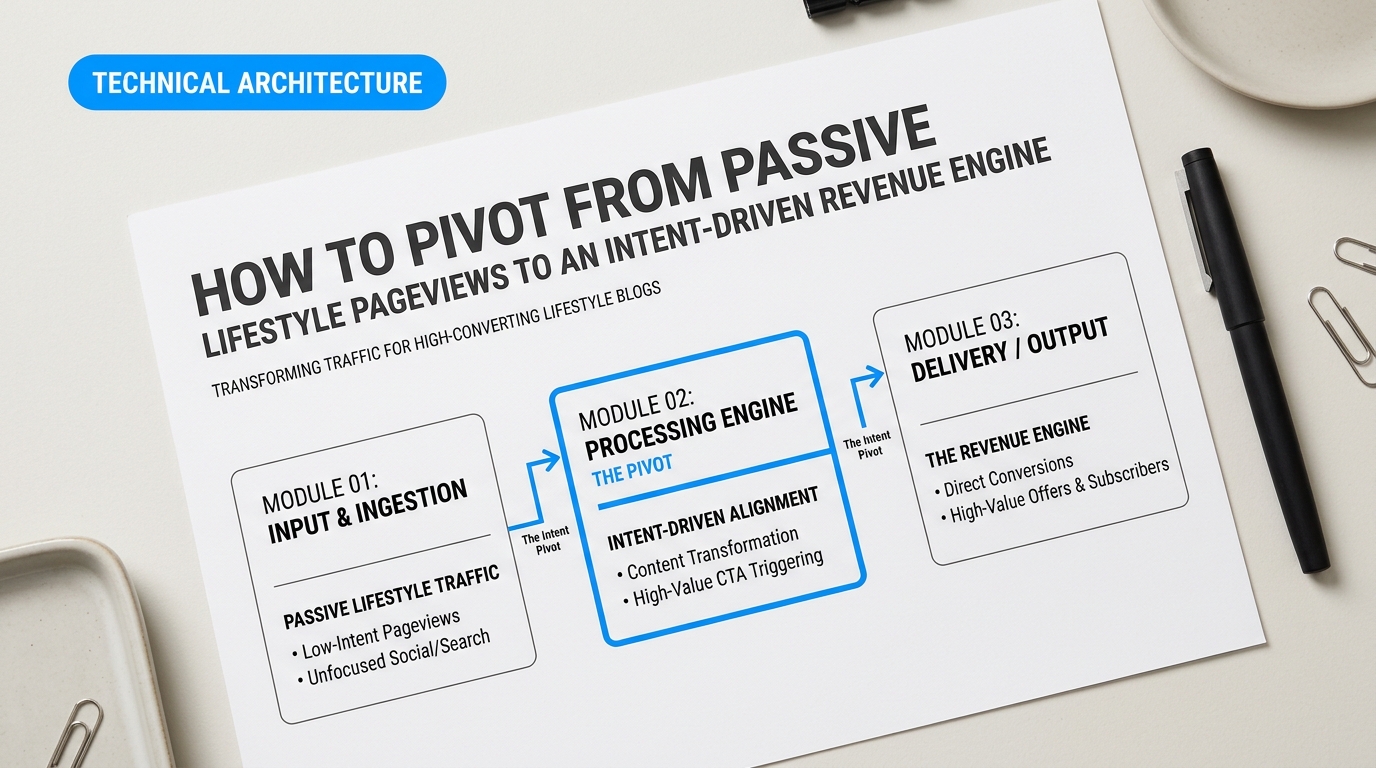
Pageviews won’t pay your hosting bills. For years, creators treated lifestyle blogging like a glossy magazine where sheer volume solved every financial problem. That model is dead. When someone reads an article titled “My Tuesday Morning Routine,” they want casual entertainment. They are relaxing on the couch, killing time between meetings, or looking for pretty pictures. They aren’t reaching for their credit card.
Think of passive lifestyle readers like window shoppers strolling down a boardwalk on vacation. They look. They touch a few items. They smile, and then they leave empty-handed. Intent-driven readers are completely different. They are walking into a hardware store holding a cracked plumbing pipe. They have an urgent problem, they need an exact fix, and they are ready to swipe a card to get it.
Solving the Commercial Gap: Why Lifestyle Blogs Fail to Convert Passive Readers
The core reason why lifestyle blogs fail to convert is an intent mismatch. Lifestyle bloggers tend to write about their personal affinities rather than reader pain points. You might love sharing your five-step evening tea ritual, but search engines see that as low-intent, informational browsing. Readers consume the words and leave. If you want sustainable revenue, you have to engineer the path from passive browsing to commercial action.
You don’t have to delete your personal brand to fix this. You simply need to wrap your personal experience around questions people type into search engines when they want a solution. Take a look at how standard lifestyle topics shift when you target commercial search intent:
| Passive Lifestyle Query (Zero Intent) | Intent-Driven Pivot (High Intent) | Direct Monetization Asset |
|---|---|---|
| “How I Organize My Small Kitchen Pantry” | “Best Stackable Pantry Bins for Deep Shelves” | Affiliate product teardown with dimension comparisons |
| “My Favorite Fall Outfits This Year” | “Waterproof Chelsea Boots Review for Wide Feet” | Wear-and-tear review with direct brand discount codes |
| “Reflections on Exhausting Toddler Bedtimes” | “Two-Year-Old Sleep Regression Schedule Printable” | $14 digital routine tracker and bedtime audio bundle |
Notice the difference? The intent-driven queries target an acute problem. The reader wants to buy containers that fit deep shelves, find boots that won’t pinch their feet, or stop bedtime meltdowns tonight. When your content meets them at the moment of friction, conversion rates jump naturally from fractional decimals to double digits.
Building Content-Specific Capture Points
Stop placing generic “Join My Weekly Newsletter” forms in your website footer. Nobody wakes up wishing for another generic lifestyle email in their inbox. Readers give away their personal contact information only in exchange for immediate relief.
A high-converting capture point is an irresistible trade. It offers a single, actionable takeaway that complements the article the user is reading. If your post reviews non-toxic cookware, offer a one-page “Pots and Pans Safety Cheat Sheet” that lists dangerous coatings to avoid while shopping. If your post covers weekly meal prep, offer a grocery checklist with exact ingredient quantities.
“When we shifted our blog from general lifestyle updates to targeted lead magnets attached to specific problem posts, our daily subscriber acquisition jumped by 340%, and unsubscribe rates dropped to near zero.”
To execute this without drowning in manual tasks, picking the right software matters. Many creators discuss their setup struggles online, as seen in threads where creators share marketing funnel pitfalls on Reddit. For small teams, using dedicated funnel software beats hacking together disjointed plugins every time.
Two platforms lead the market for this specific transition:
- Kit (formerly ConvertKit): Built specifically for solo creators and editorial teams. It lets you create custom opt-in forms, tag readers based on the specific blog post they read, and deliver automated email sequences without touching code. Pricing starts with a free tier up to 10,000 subscribers, making it very accessible.
- OptinMonster: A powerful conversion optimization tool that sits on top of your site. It triggers targeted slide-ins or inline boxes based on reader behavior, like how far down the page they scroll. While it requires an extra monthly subscription, its deep targeting rules prevent site visitors from seeing irrelevant offers.
Recommending Products That Solve Pain Points
Another major reason why lifestyle blogs fail to convert traffic is the “shopping catalog syndrome.” Bloggers throw 30 affiliate links onto a page and hope someone clicks something. That approach causes choice paralysis. When visitors face too many options, they freeze and click away.
Position yourself as a selective filter, not an open catalog. Instead of listing every sweater you tried this winter, review the single best option for women living in humid climates. Break down why it holds up, how to wash it without shrinkage, and where the manufacturer cut corners. Honesty sells better than relentless praise. When you outline who a product is not for, readers trust your recommendation for who should buy it.
Shift your editorial calendar away from random lifestyle diaries toward search terms containing high commercial intent modifiers: “best for,” “review,” “alternatives,” and “vs.” Pair those focused articles with targeted email incentives, and you stop begging for pageviews. You start running a predictable business.
Building Lasting Authority: Moving from Lifestyle Chronicle to Conversion Machine
Pretty layouts don’t pay bills. For years, digital publishing rewarded broad lifestyle musings, breezy journal entries, and soft product recommendations tucked inside soft-lit photography. That era is over. Understanding why lifestyle blogs fail to convert comes down to recognizing the gap between passive consumption and active intent. Readers don’t pull out credit cards just because they admire your morning routine; they spend money when you solve a defined, urgent friction point in their lives.
The pivot from an online diary to a sustainable digital media brand demands an operational overhaul. You’re no longer just chronicling your tastes. You’re building a structured asset. That requires leaving aesthetic vanity behind and replacing it with measurable conversion architecture.
Fixing Why Lifestyle Blogs Fail to Convert: A Sustainable Roadmap
Making this shift requires three deliberate changes in how you design, publish, and monetize your content ecosystem:
- Intentional Audience Qualification: Stop writing for everyone. Broad appeal guarantees poor commercial results because general lifestyle readers rarely share a single, monetizable problem. Define the specific outcome your publication delivers, then build content pillars around the questions people ask right before they make an investment.
- Distinct Value Propositions: Relatability gets attention, but positioning drives sales. Show your readers exactly why your perspective, framework, or recommended tool solves their problem faster than conventional advice. Your blog should answer: “What tangible transformation does a reader walk away with after ten minutes on this page?”
- Disciplined Conversion Mechanics: Swap generic sidebar widgets for contextual, problem-specific capture mechanisms. If an article covers home studio acoustics, your lead magnet shouldn’t be a generic weekly newsletter. It should be a one-page gear checklist and room treatment blueprint that directly segments that reader into a targeted email workflow.
Your tech stack determines how smoothly you make this transition. Many creators stick with basic email plugins that treat every subscriber identically. Switching to a dedicated creator platform like Kit (formerly ConvertKit) lets you tag users based on click behaviors and specific post categories. This ensures your culinary readers don’t receive offers meant for your budget-travel audience. If you run a larger operation or sell high-ticket services, combining your publishing platform with HubSpot offers deeper pipeline tracking, though its steeper learning curve and higher entry cost can overwhelm solo publishers. Start lean, but prioritize tools that measure user intent rather than simple pageview volume.
“Traffic without intentional segmentation isn’t an audience; it’s just a crowd passing through your living room.”
Many publishers hesitate because running a conversion-focused platform sounds technical and uninspired. As noted by Reddit marketers discussing technical deployment pitfalls, teams often get bogged down attempting complex automations before they’ve even validated what their readers actually want to buy. You don’t need a massive fifty-step funnel to see results. You just need clear commercial paths.
Audit your top ten most visited articles tomorrow morning. Cut the vague recommendations. Add high-intent lead captures that address real pain points, link directly to proven solutions, and give your readers an obvious next step. When you respect your audience’s time by solving their problems, conversion stops feeling like an uphill battle and becomes the natural outcome of your work.
